AI Communications




Analyst firms look at technology markets in different ways. They don’t use the same methods to evaluate vendors. So it stands out when three firms reach the same conclusion. Nucleus Research, Aragon Research, and Omdia have done just that.
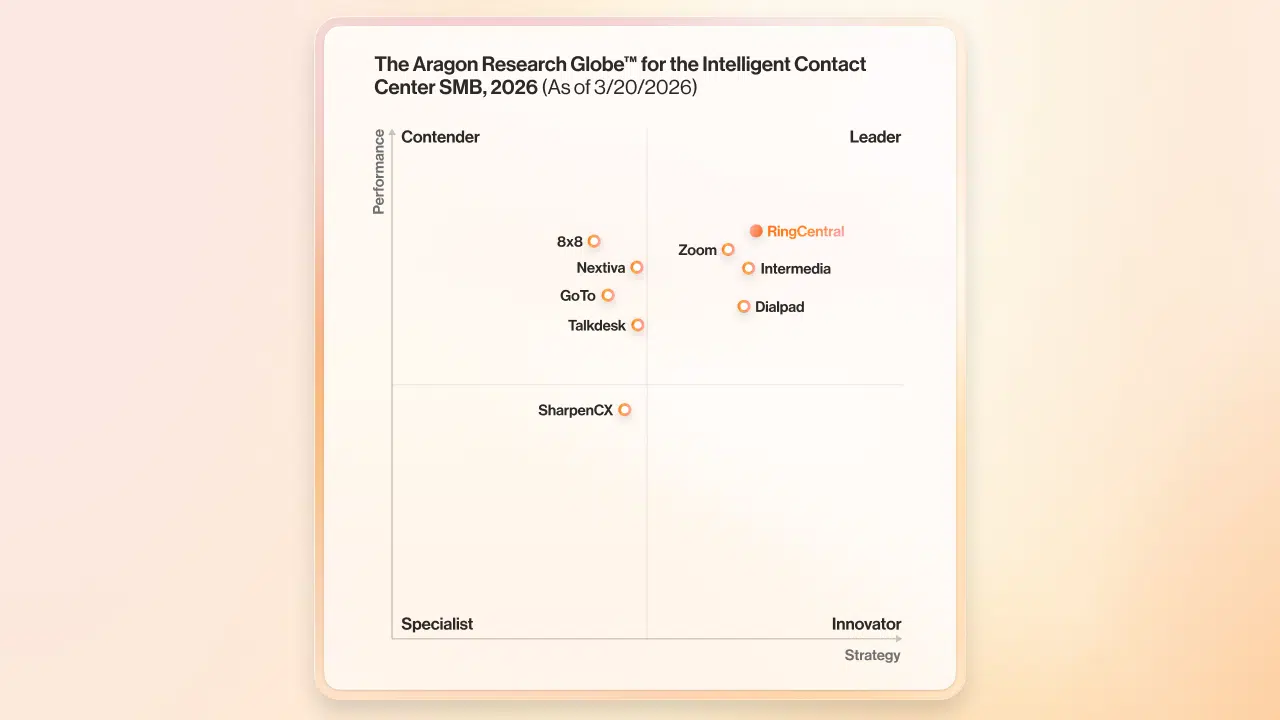
Nucleus Research named RingCentral a Leader in its 2026 CCaaS Technology Value Matrix, pointing to RingCentral’s usability, AI innovation, and unified communications. Aragon Research named RingCentral a Leader in its 2026 Globe for the Intelligent Contact Center for SMB, highlighting RingCentral’s AI roadmap, unified communications platform, and growing agentic AI strategy. Most recently, Omdia named RingCentral a Leader in the 2026 Omdia Universe: Contact Center as a Service.
The three reports cover different market segments and use different evaluation frameworks. Yet they describe the same shift: the contact center is becoming an intelligent platform where AI, communications, customer engagement, and workforce management come together.
Here are three themes that stand out.
1. AI is moving from assistant to autonomous coworker
All three firms agree the market has moved past basic AI features. Nucleus says vendors now stand out through AI that improves measurable business outcomes. This includes agent assist, virtual agents, automated quality management, summarization, sentiment analysis, and workflow automation. Checking a feature box isn’t the goal anymore.
Aragon reaches a similar conclusion in its own way. It describes digital labor, AI Assistants, Agent Coaches, and specialized AI agents that work alongside people. These tools automate routine work and free up employees to focus on higher-value customer interactions.
Omdia adds another proof point, highlighting RingCentral’s rapid incorporation of conversation intelligence, AI-powered summaries, and agent assist to improve agent productivity and customer experience. The report also recognizes RingCentral’s addition of native, AI-powered workforce management, scheduling, and forecasting through CommunityWFM.
This direction matches RingCentral’s recent AI work. Over the past year we’ve introduced an expanding portfolio of AI capabilities, including:
- RingCentral AI Receptionist (AIR) for autonomous inbound call handling
- RingCentral AI Virtual Assistant (AVA), which brings conversational AI across voice, video, and messaging
- AI Conversation Expert (ACE) for real-time coaching and next-best-action guidance
- RingWEM, which brings AI-driven workforce engagement and quality management
- Agentic AI innovations across RingCX, including always-on AI capabilities and intelligent automation that help organizations resolve customer issues faster
Together, these capabilities are becoming part of an AI-driven operating model for customer engagement.
2. Customer engagement works best when communications and the contact center become one

Another shared theme is integration. Nucleus highlights RingCentral’s ability to combine contact center workflows with everyday business communications. This helps organizations reduce platform fragmentation and simplify deployment. Nucleus calls this unified approach a core differentiator.
Aragon reaches the same conclusion from the SMB buyer’s side. It says Unified Communications and Intelligent Contact Centers are becoming one AI-powered communications stack. The report points to growing demand for integrated solutions over separate applications.
Omdia reinforces this view, identifying RingCentral’s integrated CCaaS and UCaaS platform as a key strength. The report highlights how RingCX simplifies technology stacks, strengthens connections between customer service teams and knowledge workers, and brings more than 20 digital and voice channels into a single agent workspace.
This vision matters more as customer interactions spread across more channels and teams.
Recent RingCentral work reflects this shift, including our expanding RingCX portfolio and Unified Intelligence features that connect voice, video, messaging, and AI. We’re helping organizations work from shared context and shared intelligence instead of separate systems. As AI takes on more autonomous work, connecting communications, customer data, and workflow becomes a bigger advantage.
3. Context is becoming the biggest advantage in AI
The most interesting overlap among the reports is their focus on context.
Nucleus points to usability, operational visibility, and integrations that surface customer context to agents while cutting complexity. It argues that AI needs to improve business outcomes to succeed.
Aragon goes further with the idea of a knowledge lake, a shared and trusted knowledge base that powers both employees and AI agents. Aragon predicts that by the end of 2026, half of contact center providers will use knowledge lakes to improve AI accuracy.
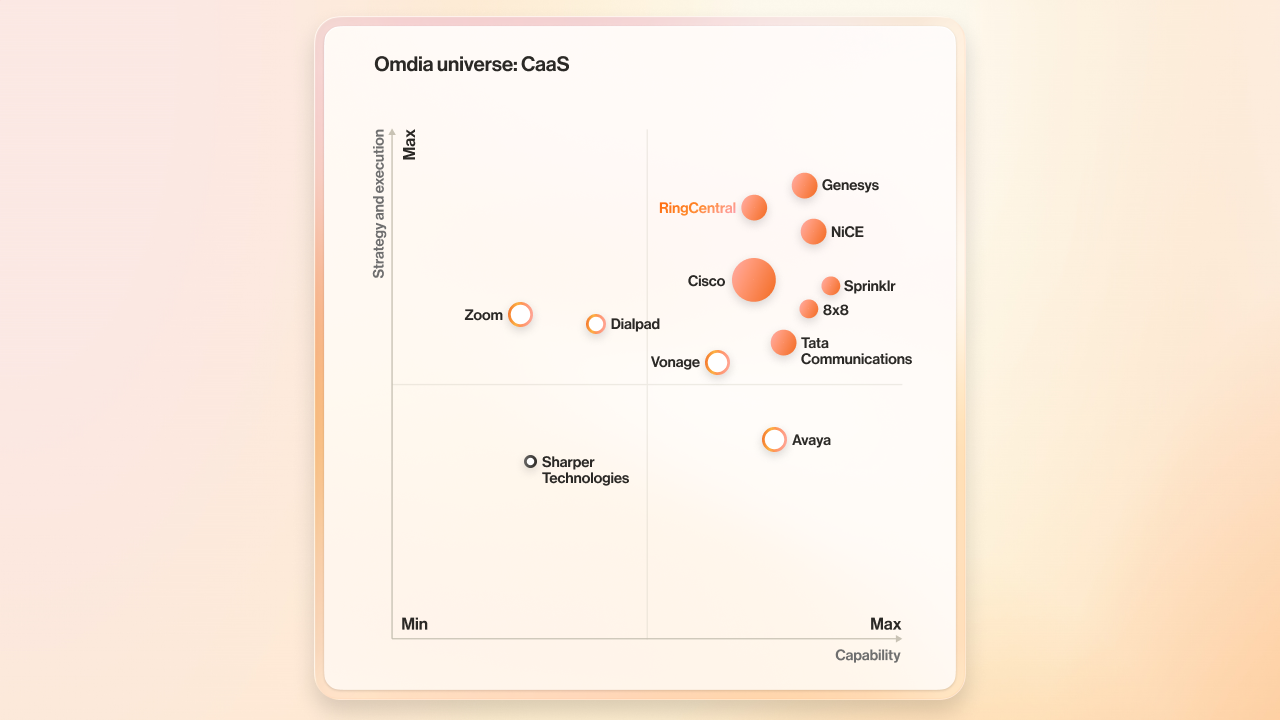
Omdia similarly highlights RingCentral’s ability to support unified analytics across communication touchpoints and maintain consistent customer context throughout the journey. That foundation becomes increasingly important as AI agents take on more complex customer interactions and need the same trusted context as human employees.
Companies with the best context for their AI will have an edge over companies that just add more AI.
What this recognition means
Recognition from independent analysts always matters. What stands out here is how closely all three reports agree on where customer engagement is headed.
Nucleus Research, Aragon Research, and Omdia each see AI becoming more deeply embedded in customer interactions, communications and customer engagement converging on unified platforms, and trusted context becoming essential to delivering better outcomes.
These themes have shaped RingCentral’s strategy already, from RingCX and AI Receptionist to AI Virtual Assistant, Unified Intelligence, RingWEM, and our broader investment in agentic AI.
Success in this space will come from AI that’s connected, contextual, and built into how people already work. Nucleus Research, Aragon Research, and Omdia all point toward that future – and it’s the future RingCentral is building.
Updated Sep 04, 2026