AI Communications








What outsourcing a call center delivers and when bringing volume back in-house with AI wins.
Your support queue is on fire. Tickets are stacking up faster than your team can clear them, wait times are creeping past anything a customer will tolerate, and hiring won’t close the gap fast enough. So you do what most growing companies do at this point: you look at call center outsourcing and think, let someone else run the phones.
It’s a reasonable move. Handing volume to a business process outsourcing (BPO) company buys you trained agents, 24/7 coverage, and lower per-hour costs almost overnight. But the trade runs deeper than price. You gain relief but lose a measure of control over how your customers are served, and that tension sits at the center of every outsourcing decision.
Here’s the honest version most guides skip. Outsourcing is a legitimate option. So is outsourcing less by automating more. This guide walks through both, so you can decide how much of your volume genuinely needs human agents somewhere else before you ever sign a contract.
Key takeaways
- Offshore outsourcing cuts per-hour cost the most but introduces the highest control and quality risks
- A shortlist of providers only matters after you settle the build-versus-buy question
- AI now absorbs the repetitive contact volume that used to justify outsourcing in the first place
- Pricing model and agent location drive your real cost more than headline hourly rates
- The primary question isn’t whether to outsource, but how much volume you can automate first
What is call center outsourcing?
Call center outsourcing is the practice of hiring a third-party provider to handle some or all of your customer phone support instead of running it with your own staff. The provider supplies agents, technology, and management, and you pay per hour, per call, or per seat to shift operational load off your team.
The definition above covers voice. Contact center outsourcing goes wider, adding the digital channels customers now expect, including email, live chat, SMS, social messaging, and sometimes video. Most modern providers do both, so the two terms often get used interchangeably. The distinction that matters for you is scope: whether you’re handing off phone calls or handing off whole customer conversations across every channel.
Inbound call center outsourcing
An inbound call center handles calls coming into your business. These are primarily customer service and support requests initiated by potential and existing customers.
An inbound call center outsourcing company negates the need for an internal customer service department. Instead, you enlist a team of external experts to manage a variety of inbound communication tasks, including:
- Answering customers’ questions about your products and services
- Delivering technical support and helpdesk services
- Scheduling appointments
- Handling customer complaints
- Processing payments and orders
- Handling subscription renewals or upgrades
Inbound contact center outsourcing companies deliver these services across a range of communication channels beyond the telephone. For example, a BPO call center might offer customer support via video chat or resolve complaints over email.
Outbound call center outsourcing
An outbound call center focuses on making outgoing calls to customers or prospects. Instead of receiving incoming requests, agents reach out directly, often (but not always) via “cold calling.”
Outsourcing outbound calls to a third-party company helps you reap the benefits of outbound calling with less strain on your time and resources. Call center outsource companies perform various functions, including:
- Telemarketing and sales
- Lead generation
- Market research
- Customer surveys and feedback
- Proactive customer support
- Appointment scheduling and reminders
- Follow-up communications
Many call center outsourcing providers are capable of handling both inbound and outbound calls. This means you can decide exactly which type of calls are a good fit for outsourcing and which are best left to your in-house teams.
For example, if you’re a global business aiming to enhance customer service accessibility and experiences, your priority might be to outsource inbound calls to a multilingual BPO call center. If your main goal is to scale your business, you might focus on outsourcing outbound calls to a BPO call center that specializes in lead generation and market research.
Which functions can call center outsourcing companies handle for you?
Outsourced call center companies run far more than phone queues. Common functions you can hand off include:
- Customer support: Tier 1 troubleshooting, account questions, returns, and general help-desk work
- Technical support: Product setup, error resolution, and escalation handling for software or hardware
- Sales and lead generation: Outbound prospecting, inbound sales calls, and lead qualification
- Order processing: Taking orders, tracking shipments, and handling changes or cancellations
- Appointment scheduling: Booking, confirming, and rescheduling across your calendar systems
- Collections and billing: Payment reminders, dispute handling, and account reconciliation
- Back-office tasks: Data entry, claims processing, and other administrative work behind the phones
The right mix depends on where your team is stretched thinnest. Some companies outsource only overflow and after-hours coverage. Others hand off a whole function so internal staff can focus on complex, high-value accounts.
Top call center outsourcing companies for 2026
Before reviewing specific providers, settle the build-versus-buy question. A shortlist only helps once you decide how much volume genuinely needs outside agents. Enterprise BPOs and specialized providers solve different problems, and the biggest name isn’t automatically right for a smaller operation with 20 agents’ worth of capacity.
| Provider | Ideal for | Pros | Cons |
|---|---|---|---|
| Teleperformance | Global enterprise scale | Massive capacity, mature AI interaction analytics | Enterprise minimums, less nimble for SMBs |
| Concentrix | Complex digital customer experience (CX) at scale | Broad channel and technology footprint, design-led CX | Geared to large programs, longer onboarding |
| Foundever | Mid-market to enterprise omnichannel CX | Wide geographic coverage, strong training culture | Consistency can vary across sites |
| Alorica | High-volume, North America-centric support | Proprietary evoAI tooling, flexible ramp | Quality can vary by site |
| TTEC | Buyers wanting BPO plus platform and AI consulting | Dual delivery and digital model | Two-track model can add complexity for simple needs |
One thing worth flagging as you scan this list: a meaningful share of the volume these providers charge you to handle, including password resets, order status checks, and basic FAQs, can now run through in-house AI instead. We’ll cover how that changes the math in a moment.
1. Teleperformance
Teleperformance is the biggest name on this list and the one built for global scale. It serves roughly 170 countries and supports 400-plus languages, so it can staff high-volume, multilingual programs that smaller providers can’t take on. Its AI interaction analytics are mature and well-proven, but the trade-off is its size. Expect enterprise minimums and a slower, less flexible fit if you’re an SMB with modest volume.
2. Concentrix
Look at Concentrix when your support spans many channels and needs design work, not just added headcount. Its Webhelp acquisition widened an already broad channel and technology footprint. That depth suits large, complex programs. It also means longer onboarding and a model geared to scale, so a simple overflow contract can feel like overkill.
3. Foundever
Foundever fits mid-market and enterprise teams that want omnichannel coverage across a wide geography. With roughly 130,000 employees covering over 60 languages, it brings real reach and a strong training culture that shows up in agent quality. Consistency can vary from site to site, so ask how they staff and train the specific location that will handle your account.
4. Alorica
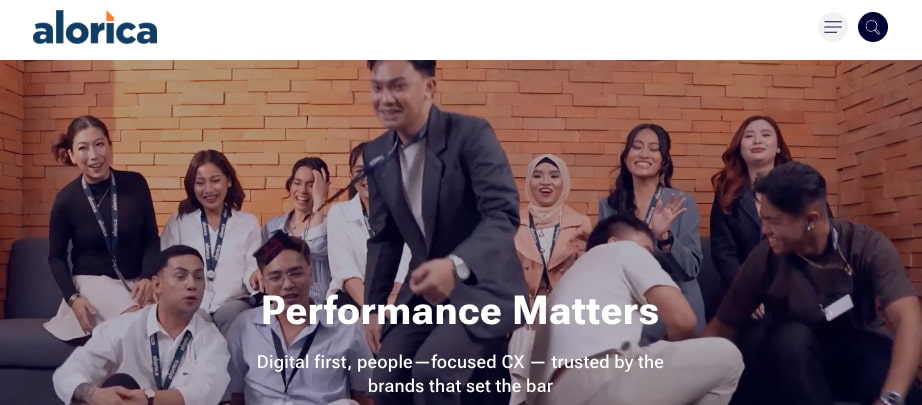
Alorica is a strong fit for high-volume support anchored in North America, with 115,000-plus employees across 17 countries. Its proprietary evoAI tooling and flexible ramp help you scale quickly when volume spikes. Quality can vary by site, so build clear scorecards and QA checkpoints into the contract from day one.
5. TTEC

TTEC works well when you want more than seats. It delivers the outsourced agents alongside platform and AI consulting, so you can buy delivery and strategy from one partner. That dual-track model is both the draw and the catch, as it earns its keep on complex programs but can feel like more than you need for a straightforward support queue.
Consider AI solutions before you shortlist any of these providers: RingCX‘s built-in AI can resolve a good share of the repetitive, high-volume contacts they bill for.
Benefits of call center outsourcing solutions
The demand behind the customer experience BPO market is real, with Grand View Research reporting it hit USD 113.0 billion in 2025 and is projected to grow at a CAGR of 13.0% from 2026 to 2033. Companies don’t outsource because it’s trendy. They do it because, done well, it delivers on several fronts.
Potential cost savings
Outsourcing may come with a price tag, but it can sometimes be more affordable than setting up and maintaining an in-house call center.
For one, you eliminate hiring, onboarding, and training costs. You also avoid ongoing salaries, benefits packages, continuous upskilling, and other hidden labor costs.
Outsourced call centers share labor costs across multiple clients, lowering your fee per call center agent or rep. They also lead to operational cost savings since you don’t need to purchase office spaces, business phone systems, software licenses, call center technologies, and so on.
If you want to reduce costs even further, you can opt for call center offshore outsourcing, or international call center outsourcing. Working with a BPO call center in another country can lower costs substantially, due, in part, to differences in regional wage expectations.
24/7 or multilingual support
For in-house teams, providing 24/7 customer support or multilingual service is difficult if you don’t have the budget, workforce, or tech to make it viable.
BPO call centers have the capacity to staff round-the-clock agents, which allows customers to access support whenever they need it—regardless of the time zone or day of the week. And by outsourcing to a multilingual call center, you can assist customers globally in the language they speak, improving accessibility and overall satisfaction.
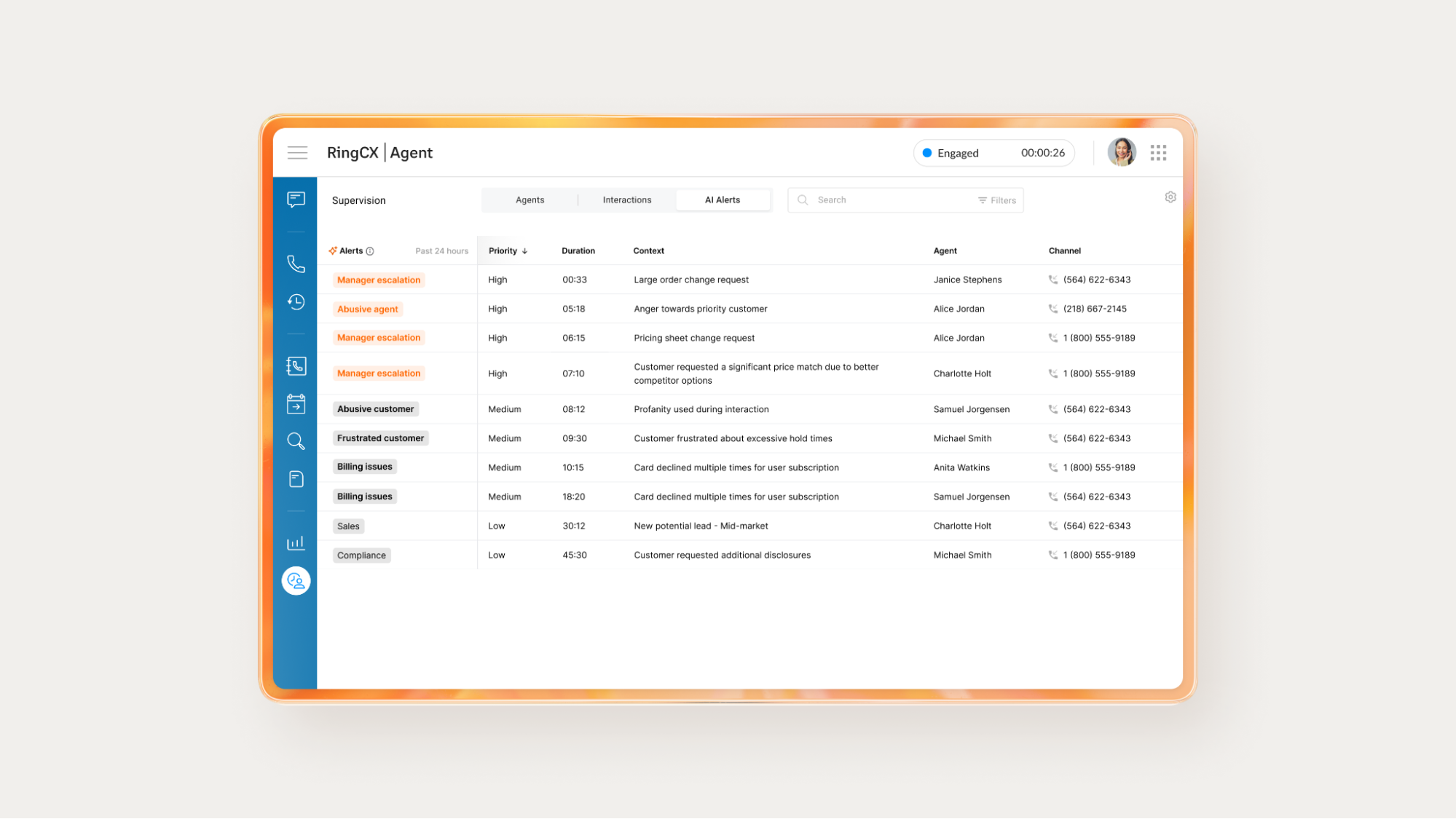
Using a contact center platform like RingCX is another alternative. It can deliver AI-powered customer service around the clock, along with live translations for personalized multilingual service.
Access to expertise
If you’re setting up an in-house call center, you have to source high-quality agents, verify their skills, onboard them into your company, and train them to meet your standards. It’s an expensive process that can take weeks or even months to complete, which isn’t always ideal for startups and small businesses.
When you outsource, you’re provided with a ready-made team of qualified, highly-experienced agents and reps. You gain rapid access to skills like CX, upselling, technical proficiency, data analytics, and more.
Faster access to expertise is one of the main reasons why small business call center outsourcing is so popular. It empowers companies to get their business off the ground and deliver exceptional customer service at lower costs. Plus, they can scale more cost-effectively without the stresses and setbacks of in-house hiring.
Hands-off simplicity
When you outsource call center support services, you no longer need to run a call center yourself, which frees you from related call center management responsibilities.
A call center outsourcing solution can handle a variety of operations for you, including:
- Hiring and training employees
- Workforce scheduling
- Task delegation
- Agent performance management
- Data reporting and analysis
- Regulatory compliance and security
Unburdened by call center management, your internal team can spend more time on core, strategic initiatives like product development, lead generation, marketing, and long-term growth.
Drawbacks and challenges of call center outsourcing
Outsourcing contact centers and call centers isn’t the right move for every business. It can hurt your CX, negatively impact your bottom line, and present additional challenges that have widespread business repercussions.
Here are some of the main drawbacks and challenges of call center outsourcing:
Loss of control
When you decide to outsource, you essentially relinquish control of your call center operations, placing core elements of your customer experience directly in the hands of a third party. This means you have no say in who gets hired to service your customers, nor do you have visibility into the quality of service they provide.
Even with meticulous briefing, you run the risk of your CX being handled by agents who aren’t a good cultural fit for your company. And, they may not be committed to delivering the levels of service that you expect.
This can have a catastrophic impact on your brand’s image. It can lead to inefficient, disjointed experiences that are misaligned with your business, resulting in customer frustration, dissatisfaction, lost revenue, and other issues.
Less specialized knowledge
Outsourced call center agents aren’t dedicated, full-time employees. They handle calls for various clients across different industries, which often means they’ll only acquire a surface-level knowledge of your company’s products, services, and policies. If you work in a highly specialized field, such as science, technology, or engineering, finding a BPO call center with deep expertise in your industry is especially difficult.
This is in stark contrast to in-house agents. Internal staff are hired and trained by you, allowing them to acquire deep, specialized knowledge of your company and industry. In turn, they can deliver faster, more relevant, and more on-brand customer service.
Security and privacy concerns
When you outsource your call center, you place sensitive customer data into the hands of a third-party company. If the company’s security measures or regulatory compliance are lacking, you risk being the victim of a data breach, which can destroy your company’s reputation and have severe legal and financial repercussions. The global average cost of a data breach currently stands at $4.99M, according to IBM’s latest report. This accounts for lost customers and revenue as well as direct financial losses.
Of course, reputable BPO call centers will have stringent security measures in place (data encryption, access controls, regulatory compliance with HIPAA, GDPR, etc). However, unlike an in-house call center, you don’t have full control or visibility into daily security operations.
For example, it’s harder to verify cybersecurity culture and awareness. You can never be truly sure how knowledgeable external agents are about security practices like password hygiene and phishing identification, nor how meticulously they follow them.
Language barriers
Many BPO call centers are located in offshore countries, such as the Philippines, India, and Eastern Europe. While this allows you to offer multilingual support to customers in different time zones, it can also cause language barriers that negatively affect customer experiences.
Offshore agents may have strong local accents that are difficult for customers to understand. Or, some agents may have varying degrees of language fluency. This can lead to miscommunications and misunderstandings that slow down resolutions and frustrate customers. It can even cause collaboration and communication issues between your internal teams and external agents.
Exceptional communication relies on both parties’ ability to clearly understand each other. Without it, efficiency decelerates, and customer relationships suffer. So, if you do decide to outsource, verify that external agents can communicate fluently and clearly in the languages used by you and your customers.
Difficulties in adapting quickly
In an in-house call center, operational issues are easy to spot and can be rectified straight away. Similarly, you can quickly identify and adapt to evolving needs, as you have full insight into—and control over—every aspect of your operations.
Outsourcing doesn’t offer the same rapid adaptability. For example, if you want to offer new products, scale up or down, or introduce new channels or technologies, you have to communicate and collaborate with the outsourced call center. It may even require a degree of negotiation, as your priorities might not be the same as theirs.
The separation and disunity of your call center from your business can cause significant efficiency challenges. It slows down your ability to swiftly adapt to new opportunities or respond to unforeseen issues.
Understanding call center outsourcing costs
Sticker price on a proposal tells you almost nothing until you understand the levers underneath it. The following five factors move your actual cost:
Sharing the workforce with other companies
Outsourced agents work for multiple clients. So, while you might be paying a fraction of the labor costs, you’re also getting just a fraction of every agent’s time and attention.
In-house labor costs might be higher, but having your employees’ undivided attention and engagement will typically produce a better ROI.
If you want the same exclusivity with your outsourcing company, you’re going to have to pay a much higher price. Bear in mind that you’ll still be waiving the control and specialized expertise that you’d get with an in-house department.
Call volumes and pricing models
How you get billed shapes your total cost as much as the rate itself. The five common models:
| Pricing model | How it works | Ideal for |
|---|---|---|
| Per-hour | You pay for agent time, whether on calls or waiting | Steady, predictable volume |
| Per-minute | You pay only for connected talk time | Short calls, variable volume |
| Per-call | Flat fee per handled interaction | Simple, uniform call types |
| Per-seat/FTE (dedicated) | Fixed monthly cost per dedicated agent | High volume needing consistency |
| Shared/pay-as-you-go | You share agents and pay for usage | Low or unpredictable volume |
Service-level agreements (SLAs)
SLAs are contractual agreements between your company and the BPO. It defines the level of efficiency, availability, and performance that outsourced companies will strive to provide to customers.
For example, your outsourced provider’s SLA might promise to “answer 80% of calls within 30 seconds.” Or, it might promise to “have an average handling time of 6 minutes.” Other SLA metrics include first-call resolution (FCR), customer satisfaction (CSAT), and service availability.
Because outsourced agents typically share calls between clients, SLAs might leave a lot to be desired. If you want a higher SLA to reliably meet customer expectations (such as faster response times and 24/7 availability), you’re looking at much higher costs.
Range of services provided
The more services you need, the higher the price of your outsourcing bill. For things like omnichannel support, business consultation, or video chat, you may have to upgrade to a premium package or purchase the services as add-ons, which can get expensive.
Opting for a premium package can even leave you paying for a bunch of services that you don’t need or use.
Whether you require specialized expertise will also affect outsourcing costs. For example, if you need agents to perform complex technical support or targeted outbound lead generation, you’ll pay much more than if you only require basic inbound call handling for general FAQs.
So, it’s crucial to consider what you actually get for your money versus what you need, all in alignment with your budget.
Location
Where your agents sit is the single biggest cost lever, and it maps almost directly to the control and quality trade-offs above. Onshore costs the most and carries the least friction. Offshore costs the least and asks the most of your quality management.
| Model | Typical hourly range (per agent) | Trade-off |
|---|---|---|
| Onshore (US) | $28 to $40 | Highest cost, best cultural and language fit |
| Nearshore | $13 to $23 | Middle cost, moderate time-zone and language alignment |
| Offshore | $6 to $12 | Lowest cost, highest control and quality risk |
Those ranges run from $28 to $40 per hour onshore, $13 to $23 nearshore, and $6 to $12 offshore per agent, according to Outsource Consultants. Cost pressure is real, and it’s exactly why the automate-first option deserves a serious look.
When to bring volume back in-house with RingCX
Here’s the part the outsourcing math usually misses. A large chunk of the calls you’d pay a BPO to answer are repetitive and rules-based: order status, password resets, hours and location questions, basic account changes.
You’re paying human agents, at whatever hourly rate, to handle work that no longer needs a human at all. Automating that volume in-house means you outsource less and keep control of the interactions that shape how customers see you.
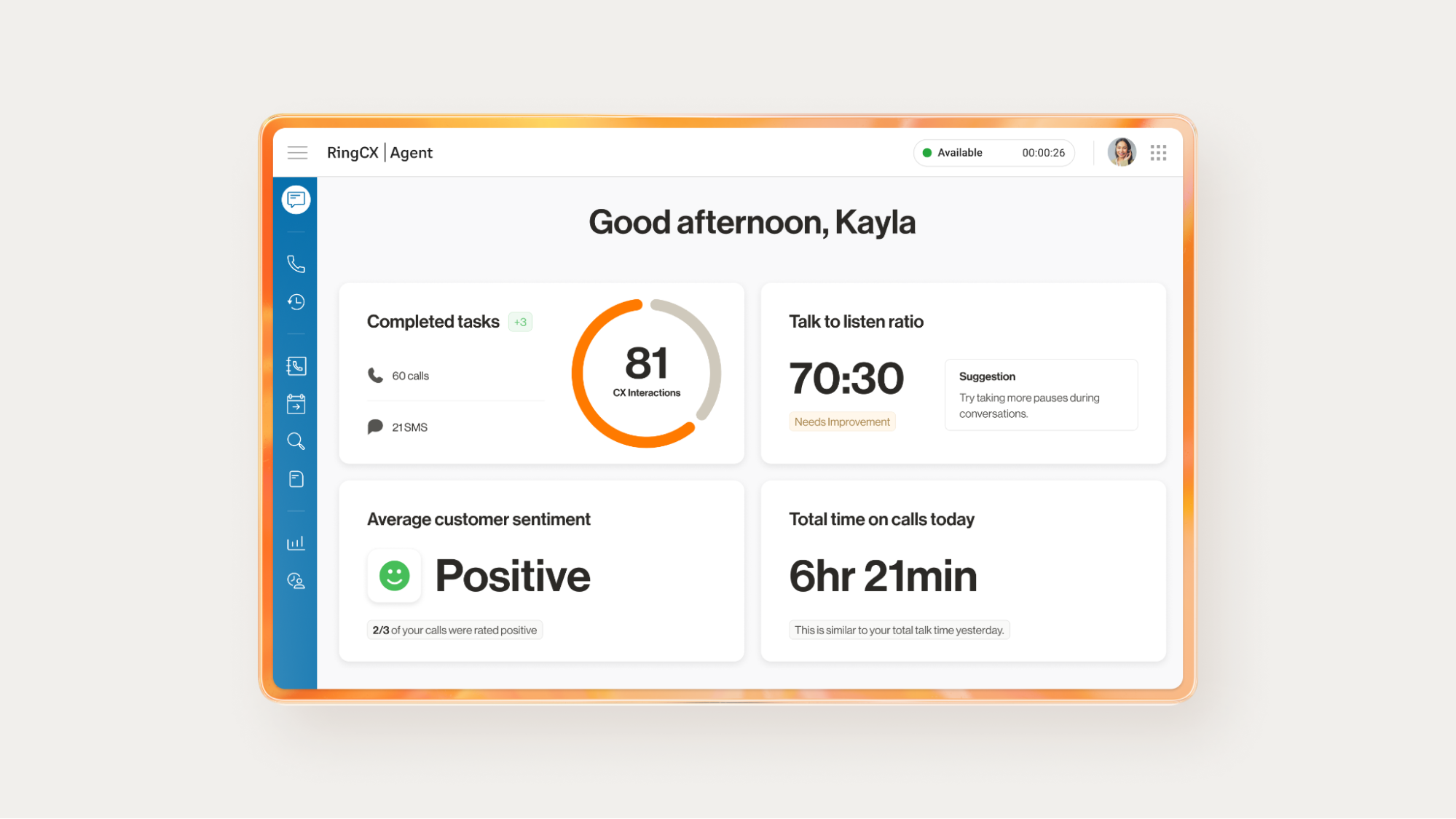
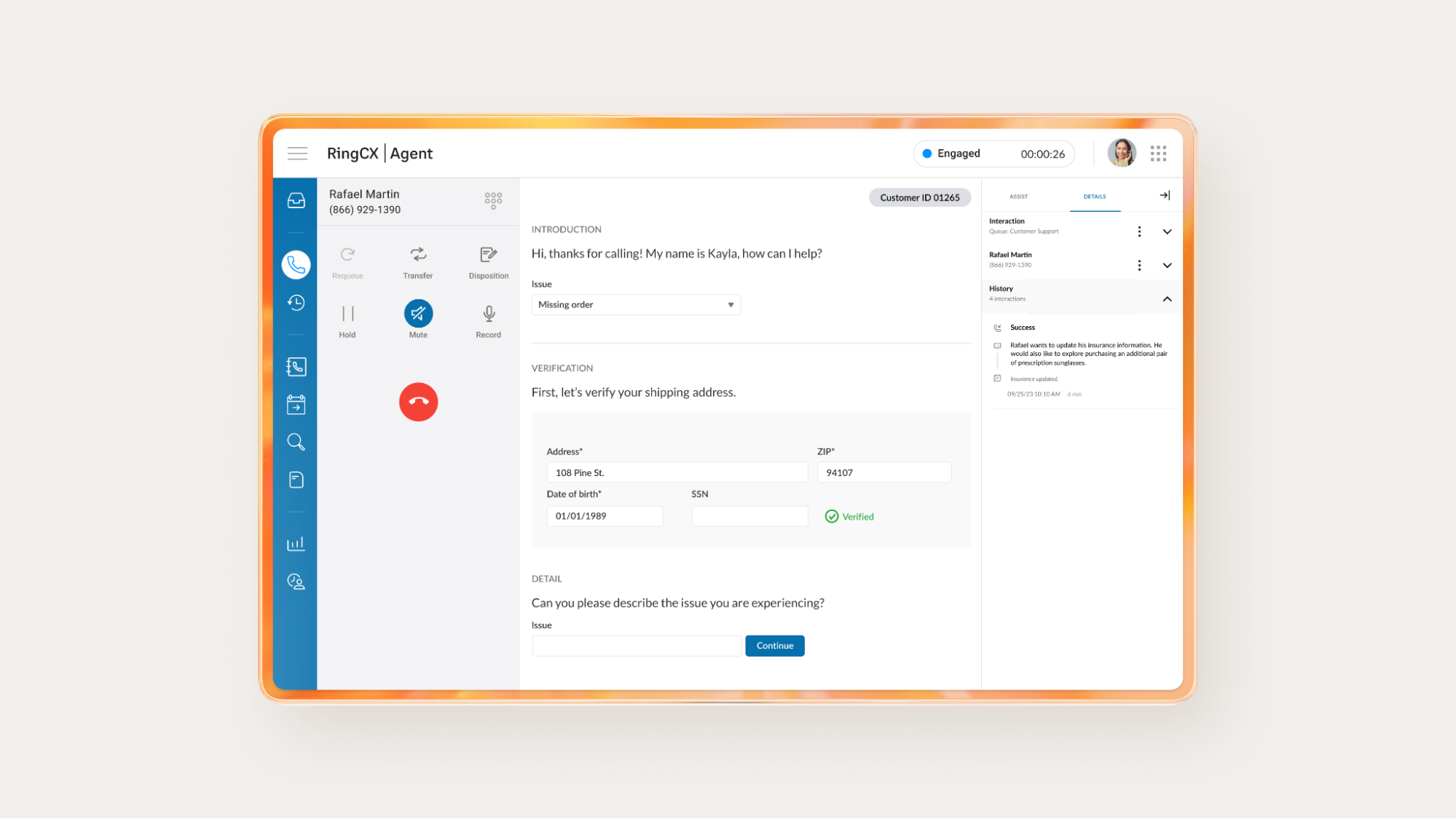
RingCX is RingCentral’s AI-first omnichannel contact center, built to absorb exactly that repetitive volume so your team handles the conversations that actually need a person. It’s the in-house alternative to renting seats for work software can do.
Here’s what you get with RingCX.
Rapid deployment
Designed for simplicity, RingCX comes with pre-packaged implementation services, intuitive admin tools, and pre-built integrations to get your contact center set up in a matter of days.
Simplified call center management
Manage your call center within one unified platform. Track performance metrics in real-time, monitor live calls, route calls based on agent skills, and use interactive voice response to optimize efficiency.
Natively integrated omnichannel
Unify over 20 digital channels, including phone, email, SMS, live chat, and instant messaging, to deliver seamless, on-brand inbound and outbound communications, all from a single platform.
AI-powered capabilities
This is where the automate-first case gets concrete. RingCX handles repetitive volume live and improves quality after the fact, using distinct tools for each:
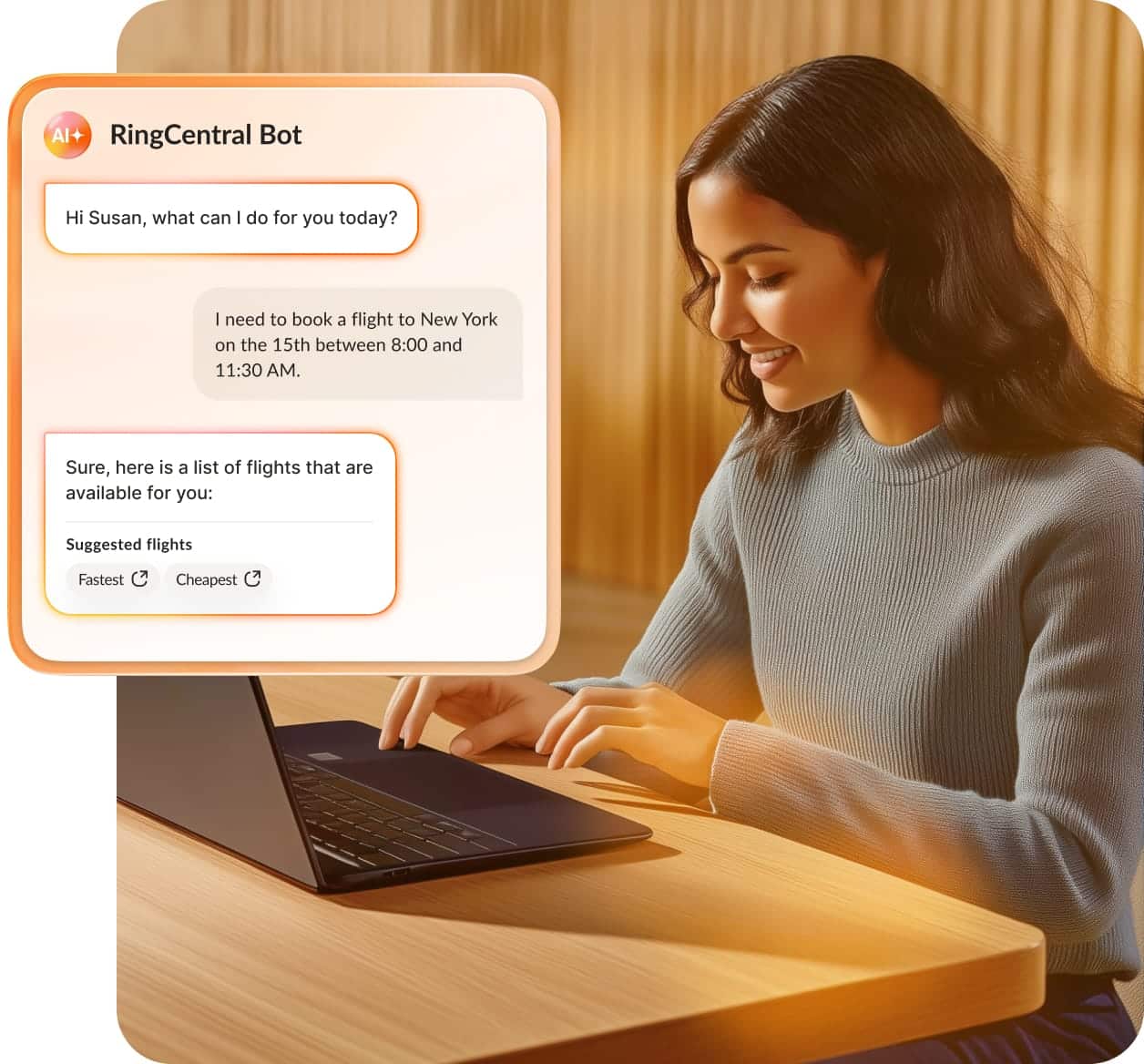
- Intelligent Virtual Agents (IVA) are voice-first AI agents that answer common questions, schedule appointments, capture leads, and route calls, deflecting routine contacts before they ever reach a person.
- AVA Agent Assist gives your live agents real-time, in-workflow guidance during a call, surfacing answers and next steps as the conversation happens.
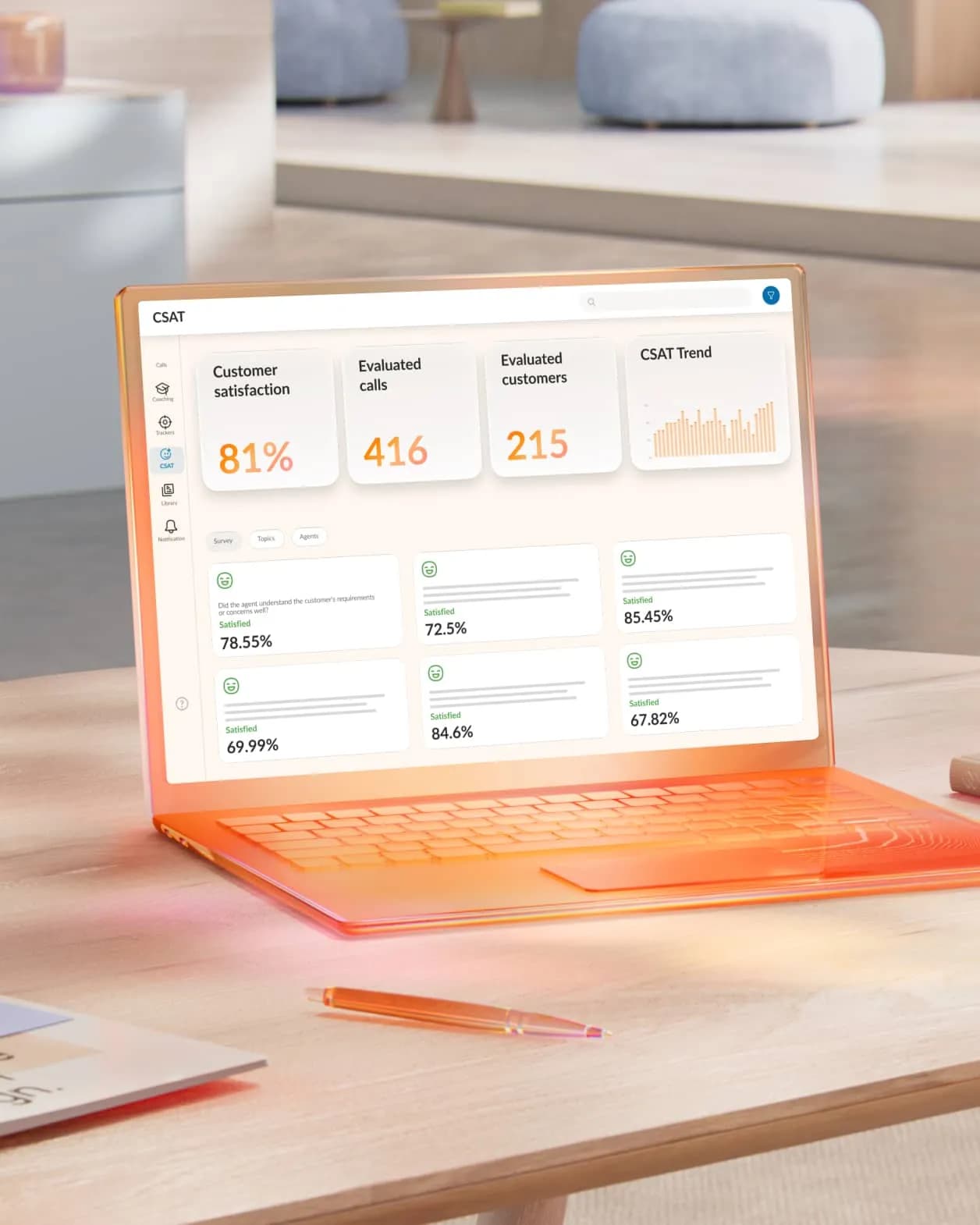
- AI Interaction Analytics works after each interaction, scoring 100% of your interactions for sentiment, intent, and root cause so you catch quality issues everywhere, instead of only in the handful a manager happens to review.
The trajectory here is steep. Gartner predicts that agentic AI will autonomously resolve 80% of common customer service issues without human intervention by 2029. Every point of that 80% is volume you won’t need to outsource, so it’s imperative for contact centers to use AI strategically in order to save on costs without compromising the customer experience.
Outsource, automate, or both: Making the call
The real decision was never “BPO” or “no BPO.” It’s how much of your repetitive volume you can automate before you outsource whatever’s left. Get that sequence right, and outsourcing becomes a smaller, sharper line item instead of a blanket handoff of your customer relationships.
Do the math before you sign anything. Model your true cost per interaction two ways: what it costs to handle a contact with in-house AI versus buying an outsourced seat to handle the same thing.
Include the hidden costs on the outsourced side, quality management, escalations, rework, and the control you give up. Most teams find a large slice of their volume is cheaper and better handled in-house, with a smaller, well-chosen provider covering genuine overflow and complex, human-only work.
When you’re ready to price the in-house path, compare RingCX contact center plans to see what automating your repetitive volume actually costs against a stack of outsourced seats.
Call center outsourcing FAQs
What is call center outsourcing?
Call center outsourcing is when a business enlists a third-party company—specifically a business process outsourcing (BPO) call center—to carry out customer communications on its behalf.
What is an outsourced call center?
An outsourced call center is a third-party operation that handles customer calls on your behalf. Its agents work from your scripts and knowledge base to answer support requests, process orders, or run outbound campaigns, so you get trained phone staff and coverage without hiring and managing them directly.
How does call center outsourcing work?
When you outsource a call center, you provide the third-party provider with the information, resources, and customer data they need to make/answer customer calls. A team of external agents will then handle your calls for you according to your contract.
How do I start to outsource call center operations?
Start by choosing a provider that offers the services that you need, whether it’s inbound or outbound call handling services. From there, brief your provider on your company policies, products, services, FAQs, brand voice, and other relevant information so that the external agents can begin handling your customer calls.
How much does it cost to outsource a call center?
Cost depends mostly on agent location and pricing model. Onshore US agents run $28 to $40 per hour, nearshore $13 to $23, and offshore $6 to $12, according to Outsource Consultants. On top of the base rate, tighter SLAs, complex work, and dedicated agents all raise the price, so compare total cost per interaction rather than headline hourly rates.
How can I choose the right outsourced call center provider?
Choosing the right outsourced call center provider involves vetting companies against your business needs. Along with considering the company’s pricing model, range of services, security, and specialized expertise, it’s crucial to take into account the provider’s values and whether they align with your brand.
Onshore, nearshore, or offshore: Which should I choose?
It depends on how you weigh cost against control. Onshore ($28 to $40 per hour) gives the best cultural and language fit at the highest price. Offshore ($6 to $12) delivers the deepest savings but the most quality and oversight risk. Nearshore sits in between, and many companies split volume, keeping sensitive or complex work onshore while sending high-volume routine work to lower-cost regions.
(Costs per hour from Outsource Consultants)
Can AI replace an outsourced call center?
AI can’t replace every function, but it’s absorbing a fast-growing share of the repetitive contacts that used to justify outsourcing.
Gartner projects agentic AI will autonomously resolve 80% of common customer service issues without human intervention by 2029, while complex, emotional, and judgment-heavy cases still need people. A platform like RingCX lets you automate the routine volume first and outsource only what’s genuinely left.
What industries benefit the most from call center outsourcing?
Industries like retail, ecommerce, healthcare, and telecommunications tend to benefit the most from call center outsourcing. They often have large or global customer bases and high demands for accessible, high-quality service, and outsourcing allows them to deliver multilingual, 24/7 service at scale on a lower budget.
Updated Sep 01, 2026