AI Communications
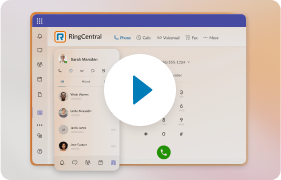










Customer expectations have never been higher. People want fast, convenient, personalized support—and they want it on the channels they already use every day. For businesses, that means meeting customers where they are, whether that’s a chat window, a text message, a social media platform, or a video call.
There are six billion smartphone users worldwide, with 270 million in the US alone. Many people use their mobile devices for everything because it’s faster and more convenient. So why should customer service be any different?
This shift is reshaping how contact centers operate, how agents work, and what customers expect from every interaction. For customer service managers, contact center leaders, and business owners considering a digital transformation, understanding how to navigate this landscape is a competitive necessity.
Whether you’re upgrading your contact center or undergoing a company-wide digital transformation, adding digital channels will help you improve the customer experience and make life easier for your agents.
Key Takeaways
- Digital customer service meets customers on the channels they already use, with the most immediate gains coming from reduced response times, lower cost per contact, and the ability to scale support without adding physical infrastructure.
- An omnichannel platform brings chat, email, SMS, social, and voice into a single agent interface, which is what separates a connected digital service operation from a fragmented collection of tools.
- AI and automation handle the repetitive, high-volume work well, but complex issues, escalations, and emotionally sensitive interactions still require a skilled human agent to resolve effectively.
- Data privacy and system reliability are baseline requirements, and businesses should evaluate platforms on uptime guarantees, security certifications, and how well they protect customer data across every channel.
- The highest-impact starting point for most businesses is automating the interactions that consume the most agent time, including routine inquiries, order status updates, and appointment reminders.
⭐️⭐️⭐️⭐️⭐️ Ready to offer 5-star customer service? Get strategies for every stage of the customer journey with this free eBook.
What is digital customer service?
Digital customer service is the practice of providing customer support through digital channels, such as chat, email, SMS, social media, messaging apps, and video—delivering through a combination of automated and human agents. Customers can reach out through whichever channel feels most natural to them, including mobile apps on smartphones and tablets, giving businesses more ways to respond quickly and effectively.
This is a significant departure from traditional customer service, where call centers handled phone calls or face-to-face interactions. Digital customer service expands that model considerably.
Digital channels used in modern customer service include:
- Chat – live chat on websites or in apps
- Email – asynchronous support for detailed inquiries
- Text messaging (SMS) – fast, familiar, and widely accessible
- Social media – support delivered where customers already spend time
- Messaging apps – platforms like WhatsApp and Facebook Messenger
- Video – for complex issues that benefit from a face-to-face interaction
To help clarify how digital customer service differs from its traditional counterpart, here’s a quick comparison:
| Traditional customer service | Digital customer service | |
|---|---|---|
| Primary channels | Phone, in-person | Chat, email, SMS, social, video |
| Availability | Business hours | 24/7 capable |
| Response speed | Dependent on call volume | Faster with automation |
| Scalability | Limited by physical infrastructure | Highly scalable via cloud |
| Personalization | Relationship-dependent | Data and AI-driven |
| Cost per contact | Generally higher | Generally lower |
Digital technology means modern contact centers can operate virtually, using CCaaS (contact center as a service) or UCaaS (unified communications as a service) software based in the cloud. Platforms like RingCX ensure a seamless experience across channels and devices.
AI and automation play an increasingly important role in this model, handling routine inquiries, routing conversations intelligently, and surfacing relevant information to agents in real time. The result is a support experience that’s faster, more consistent, and more scalable than what traditional models alone can deliver.
What are the benefits of digital customer service?
Investing in digital customer service isn’t just about keeping up with technology trends. It’s about delivering measurably better outcomes for customers, agents, and the business as a whole. Here’s what that looks like in practice:
Gives customers more ways to reach you, on their terms
Digital customer service gives everyone a way to reach out that feels comfortable, whether that’s email, a helpful chatbot, social media, or a text message. While some customers might still prefer a phone call, channel flexibility means no one is forced into a contact method that doesn’t suit them.
An omnichannel customer service platform puts all of these channels in one place, so your team never misses a message. This reduces customer effort directly—when reaching out for support feels easy, customers are more likely to follow through, feel satisfied with the experience, and stay loyal to your brand.
Here’s what that looks like in RingCX:

Resolves issues faster for customers and agents alike
Speed is one of the most consistent drivers of customer satisfaction in service interactions. Digital technology means customer issues can be resolved faster, since it’s easier to make contact, and automation speeds up average handling time. This may include:
- Routing messages and calls to the right agents
- Having instant access to customer details
- Offering self-service options
Agents can also handle multiple text or chat conversations simultaneously, so there’s less chance of anyone having to wait. That means a better first contact resolution rate for you, and less frustration for your customers.
Creates more opportunities for meaningful customer engagement
Faster resolutions free agents to focus on something more valuable: building genuine connections with customers through personalized experiences.
The omnichannel format also helps your business to reach and engage with a wider audience across more customer touchpoints.
When agents aren’t bogged down by repetitive tasks or manual processes, they have more capacity to listen, empathize, and respond in ways that leave a lasting positive impression—the kind that drives repeat business and word-of-mouth referrals.
Reduces operational costs without reducing service quality
Digital interactions tend to cost less than those on traditional service channels in terms of cost per contact (although it’s possible to choose highly affordable telephony packages and combine them with digital services).
If you transition to a virtual contact center, you’ll save money on office space and equipment. Cloud-based platforms also typically offer pay-as-you-go subscription pricing.
It’s worth noting that cost reduction doesn’t have to mean a reduction in service quality. When digital tools are implemented thoughtfully, businesses consistently report improvements in both efficiency and customer satisfaction simultaneously.
Digital tech means agents are more productive, and the less-stressful environment improves customer loyalty and agent retention.
Grows with your business without the overhead
Digital customer service is more scalable than its traditional counterpart.
The ability to work remotely means staff can be recruited from anywhere, and agents can use their own devices—so there’s no need to install physical phone lines or additional equipment. Virtual contact centers can operate around the clock, and subscription pricing makes it simple to add or remove users as demand fluctuates.
This scalability is particularly valuable for businesses experiencing seasonal demand spikes, rapid growth, or geographic expansion. A cloud-based digital customer service platform can flex with your business in ways that traditional infrastructure simply can’t.
Positions your business for long-term competitiveness
As the world grows increasingly digitized, offering customer service on digital channels is becoming a necessity. Companies need to go digital to remain competitive and meet rising customer expectations.
Beyond staying competitive today, future-proofing your online customer service by investing in digital infrastructure positions your business to adopt emerging technologies, including more advanced AI capabilities, as they become available. The businesses building digital foundations now will be better equipped to capitalize on what comes next.
Essential tools for digital customer service
Knowing which tools to invest in is one of the most practical challenges in building a digital customer service operation. The right technology stack should reduce friction for customers, make life easier for agents, and give leadership the visibility they need to continuously improve.
Although digital channels are growing in popularity, some customers still prefer to use the phone, and oftentimes a digital inquiry will escalate into a phone call.
Here’s what to look for across the core categories of digital customer service technology:
An all-in-one digital customer service platform
Putting all of your communication channels in the same place saves your team time and ensures customer questions don’t fall through the cracks.
Here’s where we toot our own horn: RingCX is an easy-to-navigate hub for your team to receive, route, and respond to every kind of customer query. Your team can connect with customers and each other across channels in order to resolve issues more quickly.
When evaluating an all-in-one platform, look for:
- Support for all the channels your customers use
- A unified agent interface that doesn’t require switching between tools
- Built-in automation and AI capabilities
- Robust reporting and analytics
- Reliable uptime and enterprise-grade security
Self-service tools that reduce agent workload

Many customers prefer self-service. In fact, 69% will try to troubleshoot problems on their own before reaching out to an agent. Giving them the tools to do so successfully benefits everyone.
Effective self-service options include:
- IVR (interactive voice response) to guide customers through options before connecting to an agent
- Chatbots that respond to common queries and handle routine requests before handing off to a human agent
- Knowledge bases and resource centers that empower customers to find answers independently, such as an interactive FAQ page on your website
Well-designed self-service tools don’t just reduce inbound volume. They improve the customer experience by giving people faster answers without requiring them to wait. The key is making sure these tools are intuitive, up to date, and connected to your broader customer service platform so handoffs to agents are seamless when needed.
Inbound automation and intelligent routing
Look for a solution that harnesses artificial intelligence and machine learning to analyze digital interactions so you can route them to the right agent every time.
With RingCX, you can define routing rules based on skills, availability, capacity, or any other criteria that fit your operation.

Intelligent routing does more than speed up response times. It improves first contact resolution by matching customers with the agent best equipped to help them, reducing the need for transfers and repeat contacts that frustrate customers and drain agent capacity.
Outbound automation and proactive customer engagement
Automating outbound customer interactions using preview, progressive, or predictive dialers improves speed and accuracy when reaching out to customers.
With automated scripts tailored to each customer, businesses can deliver consistent, on-brand experiences at scale.
Proactive outreach—notifying customers about order updates, appointment reminders, or account changes before they need to call in—is one of the highest-impact ways to use outbound automation. It reduces inbound inquiry volume and signals to customers that your business is attentive and organized.
Video and screen sharing for complex support needs
Video and screen sharing enable IT support teams to diagnose technical issues remotely and walk customers through troubleshooting or product setup. Agents can also send pre-recorded video tutorials or invite customers to attend webinars, since video calls can add a more personal touch.
With RingCX, closed captioning is available for better accessibility across your customer base.

Video support is particularly valuable for technical products, healthcare consultations, financial advisory services, and any situation where seeing the problem firsthand leads to a faster, more accurate resolution. It adds a personal dimension to digital support that customers genuinely appreciate.
CRM integrations that personalize every interaction
Customer service teams can access additional tools by integrating popular CRMs and other back-end systems. CRM integration allows agents to view customer details at a glance, personalize interactions, and automatically add new data captured during conversations.
The average worker loses a full hour each workday just toggling between various work apps, so accessing everything from one place is a significant time-saver.
RingCX enables chat with customers on WhatsApp and Facebook Messenger, and it syncs with popular social media platforms.
Beyond saving time, CRM integration ensures that every agent who interacts with a customer has full context for that relationship—purchase history, previous support interactions, preferences, and more. That context is what makes personalization feel genuine rather than scripted.
Analytics and reporting that drive continuous improvement

Digitizing your contact center gives you the opportunity to gather more data and evaluate it using advanced analytics tools. Real-time dashboards and reports display metrics covering everything from customer behaviors and preferences to agent performance.
Agent monitoring, customer surveys, and sentiment tracking help you identify ways to improve the customer journey, and the data is also useful for creating more personalized service experiences.
The most effective digital customer service operations treat analytics not as a reporting function but as a continuous improvement engine. Regular review of key metrics—first contact resolution, average handle time, customer satisfaction scores, and agent utilization—creates a feedback loop that consistently raises the quality of service over time.
Security and reliability you can count on
With speed and convenience being priorities, you can’t afford for your digital system to go down. RingCentral’s 99.999% uptime ensures your operation stays running when it matters most, and the cloud-based architecture reduces the need for in-house IT staff.
Delivering excellent customer care means keeping customer data safe. RingCentral backs that up with seven layers of security, ensuring digitally stored information is well protected.
Security isn’t just an IT concern. It’s a customer trust issue. When customers share personal information through digital channels, they’re extending a degree of trust in your business. A platform with enterprise-grade security protects that trust and helps your business meet its data protection obligations as regulations continue to evolve.
Digital customer service: A must-have for better customer experience
Digital customer service brings real, measurable benefits—greater convenience, faster resolution, lower costs, and stronger customer relationships. But those outcomes don’t happen automatically. They come from making deliberate decisions about which channels to prioritize, which tools to invest in, and how to build a team and strategy that can sustain quality as demand grows.
Digital channels don’t work best in isolation. Offering them alongside traditional channels gives customers the widest possible choice and ensures no one is left behind in the transition to digital-first service.
The businesses seeing the strongest results from digital customer service aren’t necessarily those with the most tools or the biggest budgets. They’re the ones who started with a clear strategy, chose a platform that brought everything together, and kept improving based on what the data told them.
Remember: around half of customers say they would switch to a competitor after just one bad experience. Providing a seamless customer service experience is essential, and embracing digital channels thoughtfully is the most reliable way to make that happen.
See how RingCX helps businesses deliver faster, smarter, and more connected digital customer service across every channel.
Digital customer service FAQs
What is AI in digital customer service?
AI in digital customer service refers to the use of artificial intelligence technologies, including chatbots, intelligent routing, virtual assistants, and sentiment analysis, to automate and improve customer interactions across digital channels such as chat, email, SMS, social media, and video.
Rather than replacing human agents, AI works alongside them, handling routine, high-volume tasks automatically while giving agents the context and tools they need to manage more complex interactions with greater speed and accuracy.
How can AI help improve customer service?
AI improves customer service by removing friction at every stage of the interaction. Intelligent routing connects inquiries to the right agent instantly, real-time assist tools surface relevant information during live conversations, and post-interaction analytics help teams identify patterns and gaps.
The result shows up in the metrics that matter most: faster resolution times, higher first contact resolution rates, lower cost per contact, and stronger customer satisfaction scores, all while giving agents more capacity to focus on interactions that benefit most from human judgment and empathy.
How does AI personalize digital customer service interactions?
AI personalizes customer service by pulling relevant data from integrated CRM systems, including purchase history, previous interactions, and account details, and surfacing it for agents before a conversation begins. This gives every interaction the right context from the start, allowing agents to respond to each customer’s specific situation rather than relying on a generic script.
Over time, AI learns from patterns across thousands of interactions, identifying which responses lead to better outcomes and where personalization has the greatest impact, making every subsequent interaction more relevant and effective than the last.
Where does AI have the biggest impact in digital customer service?
AI delivers the most immediate value in high-volume, fast-paced channels like live chat, SMS, and voice—where AI-powered chatbots, intelligent IVR, and real-time sentiment analysis can handle large numbers of interactions simultaneously and around the clock.
Beyond individual channels, AI’s biggest impact is on the operational layer connecting them. Real-time agent assist, workforce analytics, and conversation intelligence work together to raise the quality and consistency of every interaction. This creates a continuous improvement loop that benefits customers, agents, and the business over time.
What is conversational AI for customer service?
Conversational AI is a category of artificial intelligence that enables machines to understand, process, and respond to human language naturally across both text and voice channels. Unlike traditional rule-based chatbots that follow fixed scripts, conversational AI uses natural language processing (NLP) and machine learning to understand customer intent, maintain context across multi-turn conversations, and improve with every interaction.
In practice, it powers AI agents that can answer complex questions, guide customers through multi-step processes, integrate with back-end systems to take action on a customer’s behalf, and hand off seamlessly to a human agent when the situation calls for it.
Updated May 13, 2026