AI Communications






If you’re a small business owner, you’ll already know how important it is to keep in regular contact with your prospects and customers. There’s no better way to build relationships and develop rapport. Perhaps that’s the reason you resort to those “touching base” emails.
But are they the best way to keep in touch in today’s busy workplace? Inboxes are crowded and schedules have no space. It’s hard to reach even your most engaged customers.
Your messages have to resonate from the get-go. You just can’t afford to bore your contacts with bland subject lines, irrelevant information, or vague requests. So how can you stay in touch without annoying them?
In this post, we’ll explore different alternative ways for you to successfully reach out to your prospects and customers without resorting to unimaginative “touching base” messages.
Key Takeaways
- “Touch base” means a quick check-in to reconnect or set up a conversation, but it doesn’t say why you’re writing.
- Name the reason for your message in the first sentence: a project, a date, a question, or a useful resource.
- Build every follow-up from four parts: a topic-specific subject line, one line of context, something useful, and one call to action with a deadline.
- Match the channel to the message: email for details, calls for complex or tense topics, video for walkthroughs, and texts for short, time-sensitive nudges (with consent).
- Use plain phrasing for global teams, since sports idioms can confuse non-native English speakers.
What exactly is a “touch base” email?
A “touch base” email is a short message you send to reconnect with someone or set up a time to talk. The phrase comes from baseball, where a runner touches each base along the way. In business, it’s shorthand for a quick check-in, as in “just touching base” or “let’s touch base next week.”
Regular contact builds trust with prospects and customers, so the habit makes sense. The wording is the problem. A vague opener gives the reader no reason to open or reply.
Is “touching base” professional?
Yes, “touching base” is acceptable in casual workplace email, but many professionals now see it as filler that says nothing about why you’re writing. Readers often skim past it, which leaves your core message buried in a crowded inbox.
This habit becomes a bigger problem when writing to global teams. Idioms may cause friction across cultures. Baseball references are common in American English, and a non-native speaker may not know what “touch base” means. Translation tools often turn it into something literal and confusing. If your contacts work in different countries or languages, plain wording gets your point across faster. Our guide to business email etiquette covers more ways to keep your tone clear and professional.
Quick synonyms: What to say instead of “touch base”
| Context | Instead of “Just touching base” | Professional alternative |
| Project status | “Touching base on the report” | “Following up on the budget report draft” |
| Scheduling a call | “Let’s touch base next week” | “Do you have 20 minutes on Thursday at 2 p.m. to review the timeline?” |
| Sales follow-up | “Just touching base about our proposal” | “I wanted to see if you had questions about the proposal I sent Monday” |
| After a meeting | “Touching base after our call” | “Thanks for your time today. Here’s a summary of what we agreed on” |
| Waiting on a reply | “Just touching base again” | “Could you send the signed form by Friday?” |
| Past clients | “Touching base to see how you’re doing” | “It’s been six months since we worked together. How’s the new setup going?” |
10 alternative “touch base” email examples
Whenever you’re making contact with a prospect or customer via email, you should make sure your message is clear, to-the-point, and contains some personal relevance for the recipient.
Emails of this kind are far more likely to make an impact and elicit a favorable response compared to messages that are vague, rambling, or insufficiently personalized. The goal is never just to “touch base”. It’s to make every message worth opening and worth answering.
Each example below leads with a specific reason for writing. Swap the bracketed details for your own. For more ready-made copy, see our email marketing templates.
1. Propose a specific topic, date, and time
A clear proposal makes it easy for your contact to say yes or no. Skip “let’s touch base in the next few weeks” and name the topic and a time. Then follow up with a calendar invite to confirm.
Subject line: 20 minutes on Thursday to review the timeline?
Example: “Hello [First name], I’d like to walk through [topic] with you. Do you have 20 minutes on [day] at [time]? I’ll send an invite once you confirm.”
2. Share a relevant resource
One of the best ways to stay top of mind with your prospects without coming across as intrusive or pushy is to send them a resource you think they’ll find valuable.
A useful article, podcast, eBook, or industry report keeps you on your contact’s radar without pushing for a reply. It shows you care about their industry and their success.
Subject line: A guide on [topic] for [industry] teams
Example: “Hello [First name], as someone in healthcare [or any other industry], I thought this guide on AI receptionists might be worth a look. It covers some practical tips, and I’m happy to chat through it if any of it lines up with what you’re working on.”
3. Reference a piece of their content
One way to grab the attention of your recipient is to mention a recent piece of content they’ve published. This could be an article, a LinkedIn post, or podcast appearance the person recently published.
Make sure that any commentary you offer is thoughtful. You don’t want to sound too general, but you don’t want to come across as a stalker either.
Subject line: Your post on [topic]
Example: “Hello [First name], I just read your latest blog post about [topic]. Really interesting! Your point about [relevant detail] gave me a new way to think about [related challenge].”
4. Congratulate them after a trigger event
Events like promotions, product launches, and new rounds of investment present a great opportunity to reach out to your prospects and customers in a way that comes off as natural.
You can use your congratulations just as a way of keeping up appearances or as a way to bring up a product or service that your contact might find useful in light of the trigger event.
Subject line: Congrats on [the new role]
Example: “Hello [First name], Congratulations on the new role! Let me know If you’d like to talk about [relevant product or service], I’m happy to share how our other clients in similar roles use it.”
5. Bring up common challenges
One way to show that you genuinely understand the pain points and needs of your prospects is to reach out to them about emerging challenges in their industry.
This proactive measure lets them know that your company has their best interests at heart, and gives you a better insight into the specific issues facing the players in their market.
Subject line: How [industry] teams are handling [challenge]
Example: “Hello [First name], A lot of our clients have been experiencing [emerging challenges]. Have you been seeing the same issues? We’ve found that [tip] tends to help. Can we talk about it on a call next Friday?
6. Offer some actionable advice
Demonstrating value to business prospects is most effective when providing personalized, actionable solutions tailored to their specific operational goals or pain points.
Stay respectful and base the tip on something you can see, such as customer reviews or a public announcement.
Subject line: An idea based on your [site] review
Example: “Hello [First name], I’ve just seen some excellent reviews of [their product or service] on [review website]. Your clients seem particularly happy with [relevant features]. Have you ever considered doing [actionable tip]? I think it could help take [their company] to another level. Let me know if you’d like to discuss this further on a call.”
7. Reiterate your value
Sometimes your prospects and existing customers just need a reminder of what you can actually do for them. A simple message that reiterates the various ways you can deliver value to their particular business may well convince them to move the conversation forward.
Subject line: Another way to use [product or service]
Example: “Hello [First name]. I hope you’ve been getting the most out of [your product or service]. Don’t forget we can also help you achieve [relevant goals] with our [relevant products or services]. If that’s something you’d like to discuss, I can set up a 15-minute call to show you how?”
8. Ask for information
On projects with many stakeholders, you’ll often need input from colleagues or partners. State what you need and the deadline in the first two lines.
Subject line: Feedback needed on [document] by Friday
Example: “Hello [First name]. Have you had a chance to read the report I sent last week? I’d like your team’s feedback before Friday’s meeting. Are you free for a call at 3:00 p.m. tomorrow?”
9. Invite your contact to an event
A great way to add value to your customers’ or prospects’ lives is to invite them to a local event or webinar where they can network with other players in their industry. This creates the opportunity for you to meet them in person without forcing the matter.
Subject line: Invite: [event name] on [date]
Example: “Hello [First name]. [Your company name] is hosting an educational event about [industry topic] at [location and date]. Speakers include [name], and there’s time to network afterward. We’d love to see you there. Here’s the registration link: [link].”
10. Reach out to ex-clients
Former clients may be open to a new conversation, especially if their needs have changed. They may be underwhelmed with the service they’re getting and would welcome a fresh conversation with you.
Subject line: How’s the new setup going?
Example: “Hello [First name]. Last time we spoke, your contract with [your competitor] was due to end in three months. How has the transition gone? If anything’s changed in your goals, I’d be glad to catch up.”
The anatomy of a high-converting follow-up email
A follow-up email succeeds by respecting the recipient’s time and eliminating friction, whereas most fail by burying readers under vague openers, dense text, multiple asks, and zero deadline to act.Use the parts below as a repeatable checklist for any follow-up.
Subject lines
Write a subject line that names the topic. “Feedback needed on the Q3 budget by Friday” gives the reader context before they open it. Keep it short enough to read on a phone, around 6 to 8 words.
Context
Open with one sentence that reminds the reader of your last interaction. Mention the call, the proposal, or the document. This saves them from searching their inbox.
Value addition
Give the reader something useful: a relevant resource, a short tip, or an update that affects their work. Messages that offer something get more replies than messages that only ask.
Clear call to action
End with one request and one deadline. “Can you confirm by Wednesday at noon?” is easy to answer. Avoid two or three requests in one email, it splits the reader’s attention.
3 non-email alternatives to “touch base” emails
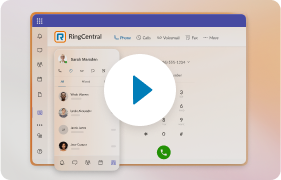
Instead of playing email tag all day, move the conversation to a channel that gets a faster answer. RingEX is an AI-powered communications platform that puts calling, video meetings, team messaging, Business SMS and fax into one app, so you can pick the right channel for each message instead of defaulting to a crowded inbox.
1. Good old-fashioned phone calls
A touch base call is the voice equivalent of a touch base email, and in several situations it works better:
- Complex or ambiguous topics: A five-minute conversation can settle what would take a dozen back-and-forth replies.
- Misunderstandings: Tone gets lost in writing. Hearing a voice helps you defuse a tense exchange before it escalates.
- Busy executives: Some decision-makers who ignore written follow-ups will take a call.
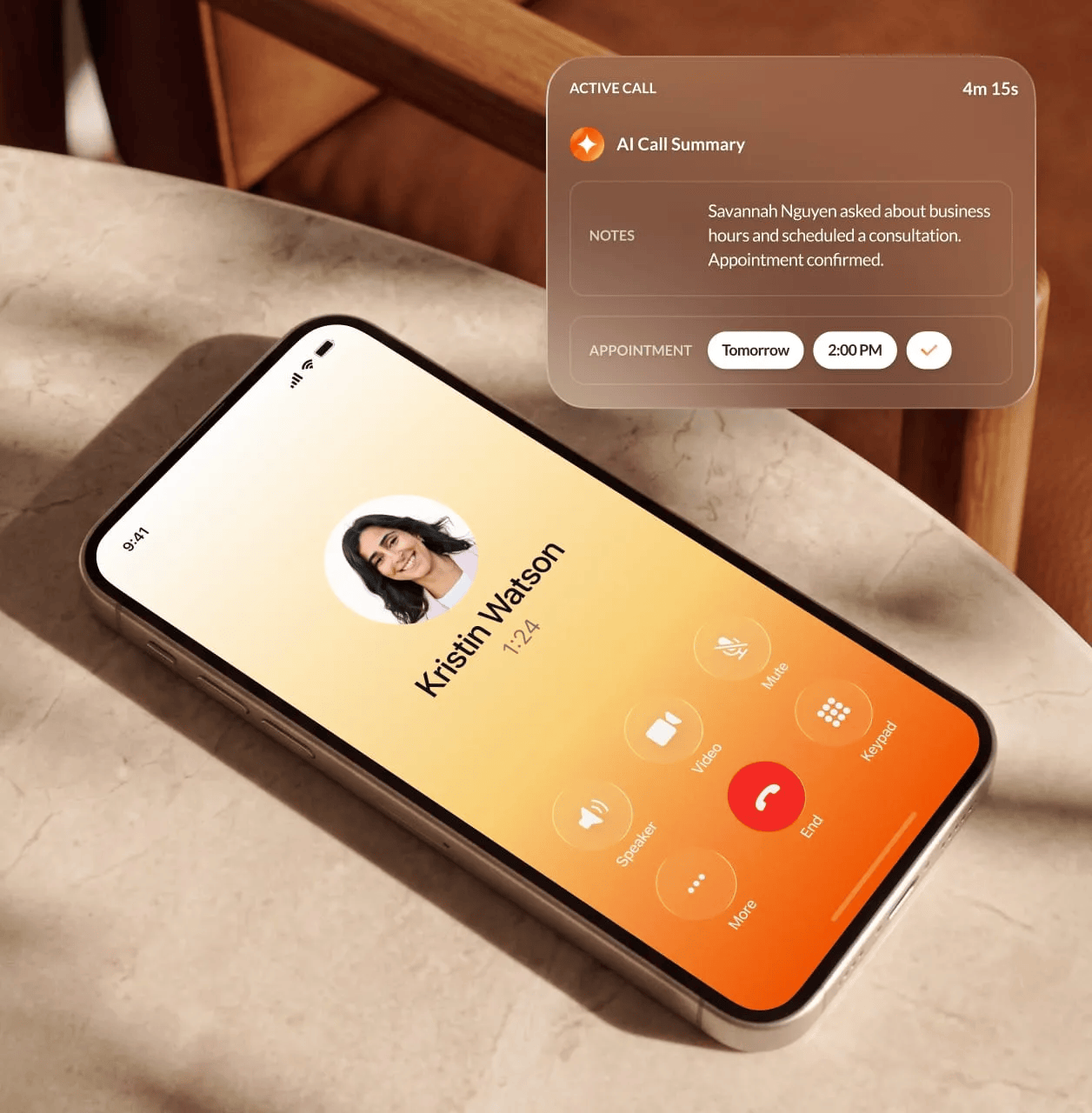
With RingEX, you make and receive secure calls from your business number, wherever you are. RingCentral AI Assistant can capture real-time call notes with key updates and action items. After the call, the notes appear in your call history, and you can share them by email, chat, or SMS in a few clicks. You stay in the conversation instead of typing a recap.
2. Video meetings
When meeting in person just isn’t practical, RingCentral Video lets you speak face-to-face with clients and colleagues from anywhere, on any device.
The AI features make follow-up easier. RingCentral’s video meeting in RingEX offering includes AI-generated transcripts and live recaps that capture decisions and action items, plus post-meeting summaries with highlights, transcripts, and notes. Instead of writing a recap email, you can share the summary and move straight to the next step.

3. Instant messaging
For quick, time-sensitive messages, text is hard to beat. SMS open rates run above 95%, and most messages are read within minutes. That makes Business SMS a good fit for:
- Appointment confirmations
- Quick calendar shifts
- Time-critical delivery updates
With RingEX, you send and receive texts from your business number, so customers see a familiar number and your personal phone stays private. A shared inbox, templates, and AI writing assistance make it easier to reply quickly.
Get in touch today to learn more about how RingCentral can boost your customer communications.
FAQs
What is the difference between “touching base” and “checking in”?
“Touching base” usually means reconnecting or setting up a conversation, while “checking in” means asking about progress or status. Both phrases are vague, so the best choice is a message that states your purpose.
What can you say instead of “wanted to touch base”?
“Wanted to touch base” is an overused business cliché that delays action because it does not state a clear purpose.
Pick an alternative based on your specific goal:
- When you need a progress report: “I’m following up on [topic].”
- When you have news to deliver: “I wanted to share an update on [project].”
- When you need a quick meeting: “Do you have 15 minutes on [day] to discuss [topic]?”
- When you want client feedback: “I’d like to hear how [project or product] is going.”
When should I switch from email to a call, video meeting, or text?
Switch from email when an exchange creates confusion, emotional friction, or delays. Move to real-time channels using these triggers:
- Phone call: Switch to a call when two consecutive emails leave questions unresolved, when you need to resolve a disagreement, or when you need an answer within an hour.
- Video meeting: Switch to a video meeting when you must share your screen, walk through a software demo, review visual designs, or guide more than two people through a multi-step project.
- Text or business SMS: Switch to text for urgent schedule updates, brief arrival notices, or one-sentence questions that need a reply in minutes.
Establish guidelines that apply to the entire team, it is important to keep those rules as simple and straightforward as possible, ensuring they are easy to understand, remember, and follow for everyone involved.
How do you say “I will be in touch” professionally?
You can make “I’ll be in touch” sound more professional by adding a clear date, a specific deliverable, or a designated next step. Open-ended phrasing often creates uncertainty for the recipient. Providing exact timeframes manages expectations, prevents unnecessary follow-up messages, and demonstrates accountability.
Updated Oct 28, 2026