AI Communications







Compare five of the best AI sales tools and learn how to choose a platform that improves conversations, pipeline visibility, and execution at scale.
AI sales tools are no longer a competitive advantage, they’re a baseline requirement.
Yet choosing tools that improve pipeline visibility, reduce repetitive tasks, and drive consistent performance across interactions is no small task. The wrong platform adds complexity. The right one becomes part of how your team sells every day.
This guide compares five leading AI sales tools, breaks down the most important features for driving measurable outcomes, and outlines a clear framework for selecting the platform that fits your environment without adding unnecessary operational overhead.
Key takeaways
- AI sales tools reduce manual work
- Conversations drive sales outcomes
- Real-time insights outperform analysis
- Integration matters more than features
- Unified platforms reduce tool sprawl
What are sales AI tools?
AI sales tools are software platforms that use artificial intelligence to help teams automate sales processes, analyze customer conversations, and close deals with less effort. Whether they use AI-powered customer relationship management (CRM) or conversation intelligence, these platforms are designed to improve how teams manage pipelines and engage buyers at every stage.
In practical terms, AI tools for sales teams reduce the operational friction that slows performance. They automatically capture and summarize calls, update CRM records, prioritize leads, and generate follow-ups so reps can stay focused on selling rather than administrative work.
Why do they matter?
The real value of AI sales software goes beyond efficiency by fundamentally changing how sales teams engage with buyers. While customers expect fast, personalized, and consistent interactions across every channel, meeting those expectations manually is difficult, especially for growing teams or complex enterprise environments.
AI sales tools make that responsiveness scalable by providing real-time context, actionable findings, and in-the-moment support. Instead of reacting after the fact, sales teams can improve conversations as they happen and follow up with precision.
For organizations evaluating these platforms, the goal is building a system that improves every interaction across your pipeline, from first touch to close.
AI in sales examples
Artificial intelligence is a broad and diverse field, and there’s a range of interrelated types and subsets you can apply to sales. Here are a few examples:
- Conversational AI: This technology mimics human interactions to engage buyers in real time. It leverages machine learning and natural language processing (NLP) to provide instant support, quality leads, or identify cross-sell opportunities through AI sales agents or chatbots.
- Conversation intelligence: Conversation intelligence focuses on analyzing human-to-human interactions. It records and transcribes sales calls to identify patterns in customer engagement, sentiment, and talk tracks, which allows managers to coach reps more effectively.
- Predictive analytics: These models analyze historical data and current activity to spot trends and project future outcomes. In a sales context, this may involve forecasting future areas of sales growth or resources needed to meet sales objectives.
- Generative AI: This type of AI produces new content, including text, images, and video. Sales teams use it to produce cost-effective sales collateral, such as personalized emails or tailored sales call scripts.
Top 5 AI sales tools for modern teams
The best AI sales tools combine automation, conversation intelligence, and real-time insights to help teams optimize every stage of the sales process.
1. RingCX
RingCentral RingCX is an AI-first contact center platform designed to improve how salespeople manage and execute customer conversations at scale. Unlike AI sales tools that operate as standalone point solutions, RingCX brings together communication, automation, and conversation intelligence in a single environment.
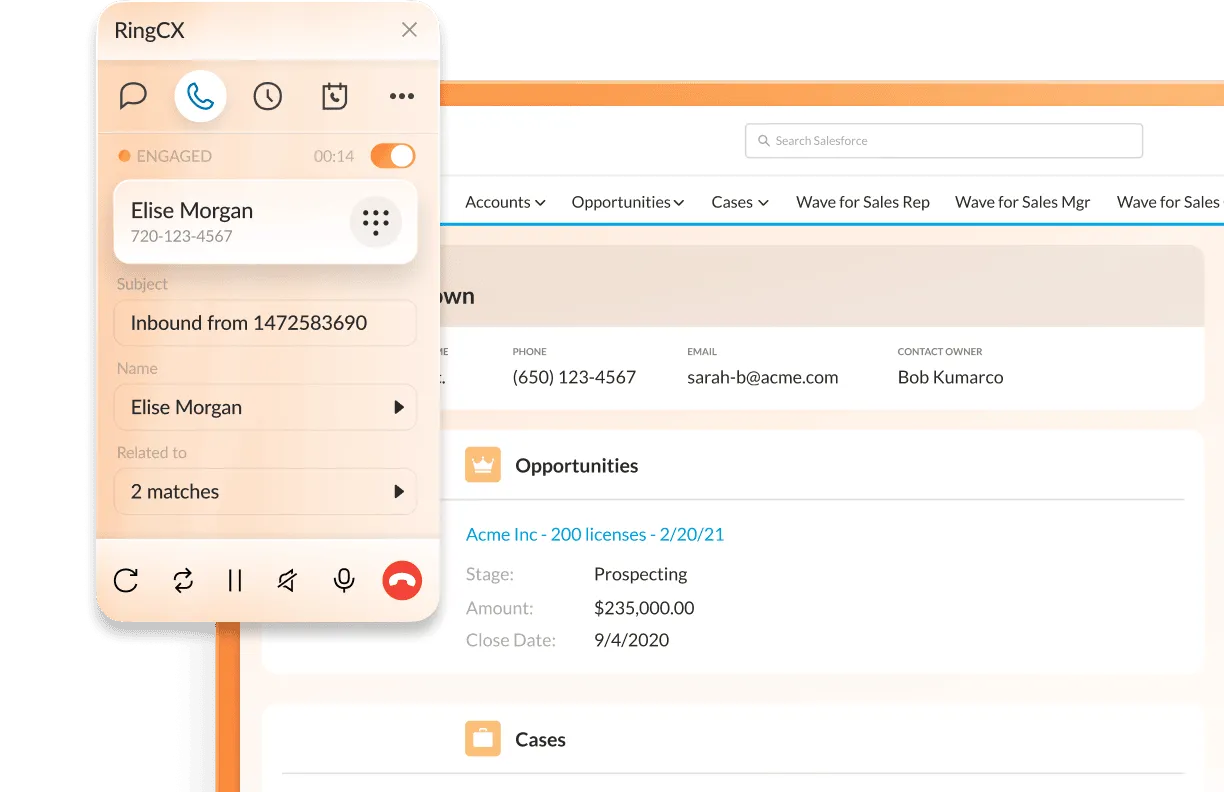
This unified approach matters for modern sales teams, as high-value interactions typically span calls, messages, and follow-ups across multiple systems. When those systems aren’t connected, teams lose visibility, face administrative bottlenecks, and miss critical deal signals.
RingCX addresses this by embedding AI directly into the full conversation lifecycle, before, during, and after every interaction, to maintain consistency across channels.
- Omnichannel conversation management: Handle voice, SMS, chat, and digital channels in one platform to give your team a complete view of every customer interaction.
- AI-powered call routing and lead handling: Use the AI Receptionist (AIR) RingCX addon to automatically route inbound leads, capture key details, and ensure prospects reach the right rep without delays or missed opportunities.
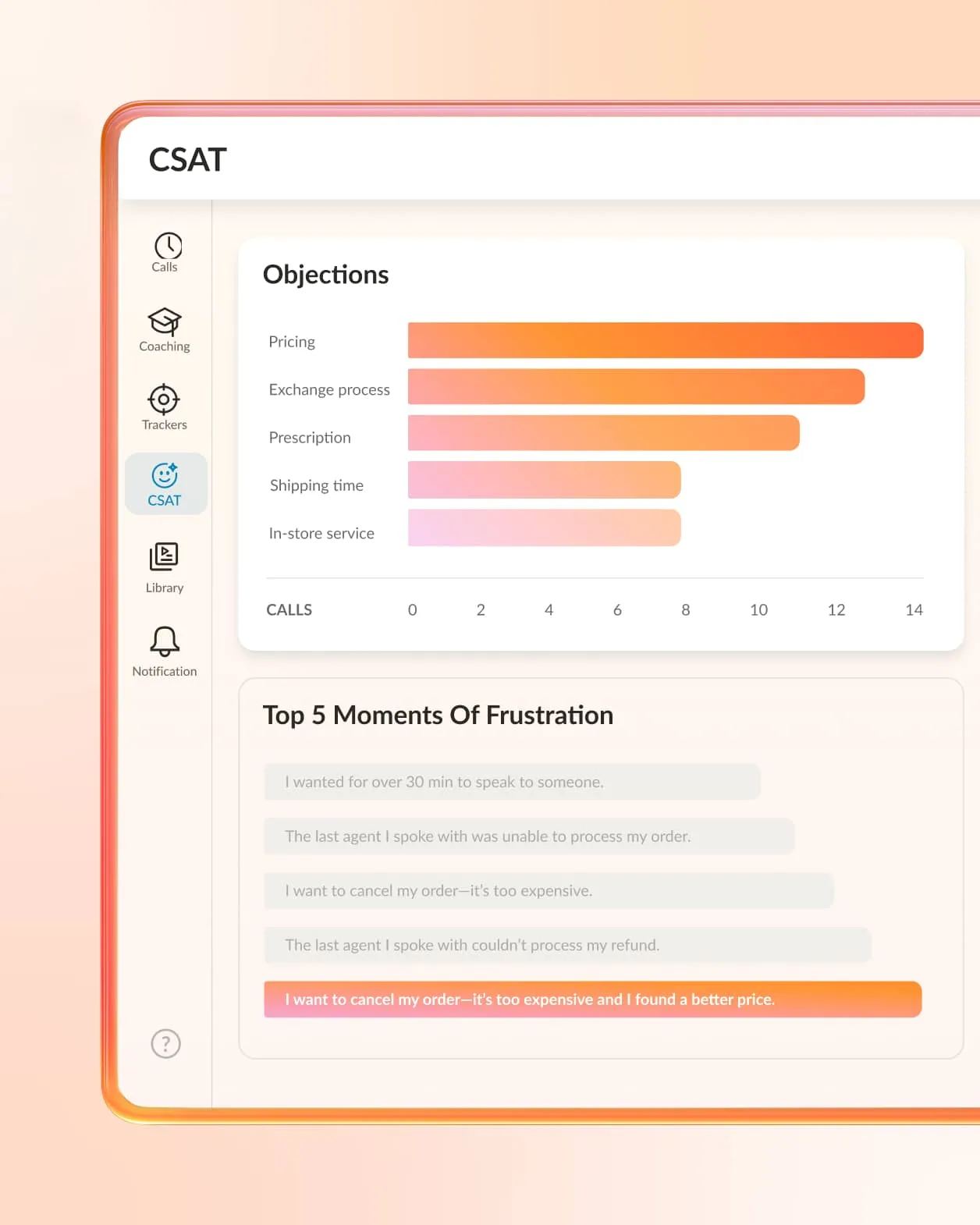
- Agent assistance based on real calls: Leverage conversational intelligence to surface context, sentiment, and customer satisfaction (CSAT) cues to help reps adjust their approach to strengthen customer relationships.
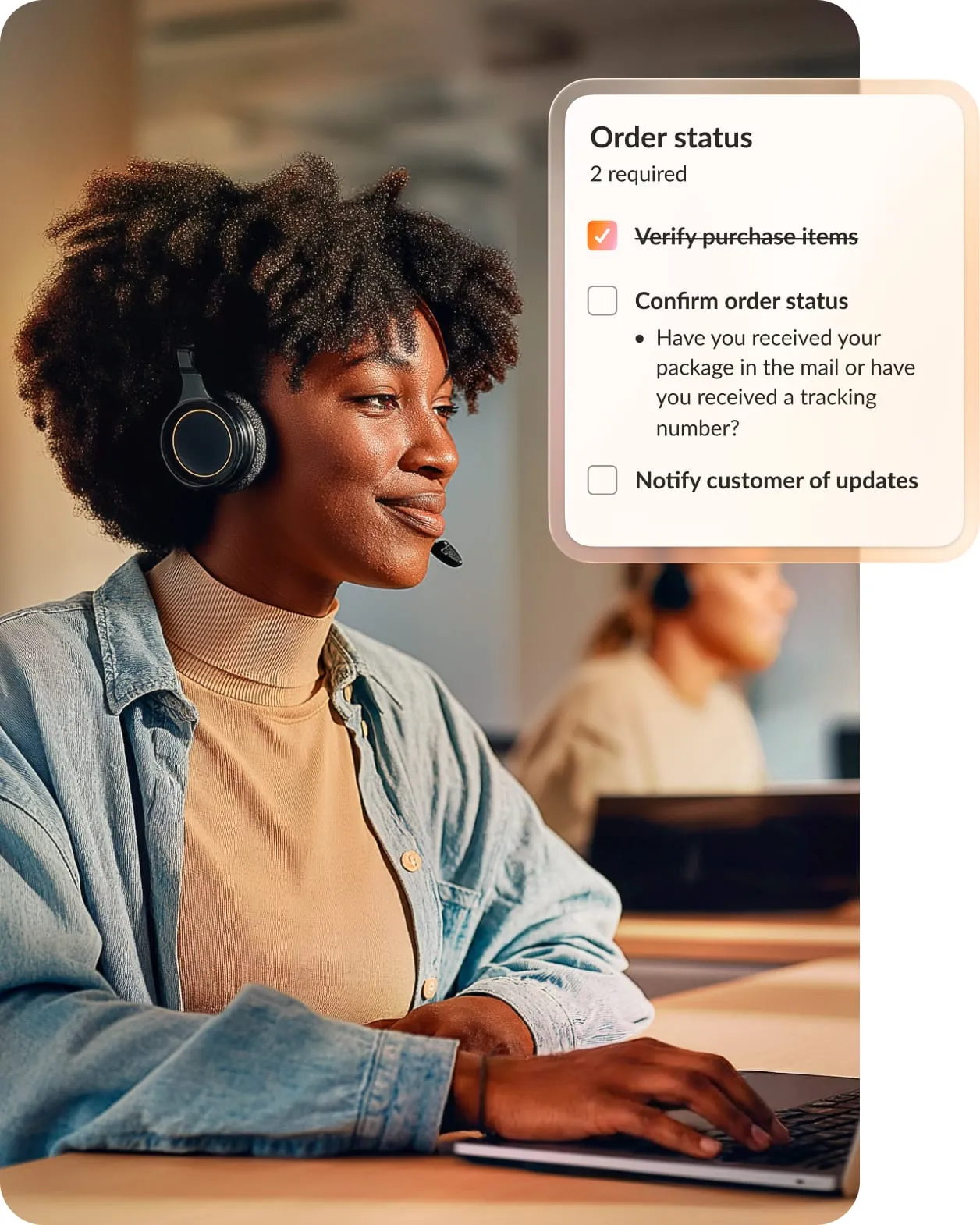
- Real-time agent assistance: Let AVA Agent Assist pull accurate and actionable steps from your knowledge base and CRM in the moment, reducing the need for manual searches.
- AI-driven coaching and quality management: Use the built-in AI Quality Management to analyze 100% of interactions to identify trends, improve talk tracks, and scale coaching across distributed teams.
- Integrated analytics and performance dashboards: Access real-time visibility into pipeline health, customer sentiment, and sales performance without relying on separate tools.
Because RingCX is built on RingCentral’s unified communications platform, these capabilities work together natively. This reduces the need for multiple AI tools and simplifies integration for IT and operations teams.
2. Salesforce Einstein
Salesforce Einstein functions as an AI layer embedded directly within Sales Cloud, making it a natural fit for organizations already operating within the Salesforce ecosystem. As one of the more established AI sales tools for enterprise teams, it focuses on enhancing CRM-driven workflows through predictive and generative capabilities.
Einstein uses unified CRM data for lead scoring to help teams prioritize deals with the highest likelihood of closing. It also surfaces engagement data from sales calls, flags moments like objections or competitor mentions, and feeds that information into dashboards for coaching. Generative features assist with email drafting, pipeline summaries, and workflow automation within the same environment.
For large enterprises with mature data infrastructure, Einstein’s tight integration can improve forecasting accuracy and operational consistency. However, effectiveness depends heavily on data quality and centralization. Organizations with fragmented or incomplete data may see reduced value, and costs often increase as data storage and usage scale.
3. HubSpot Sales Hub
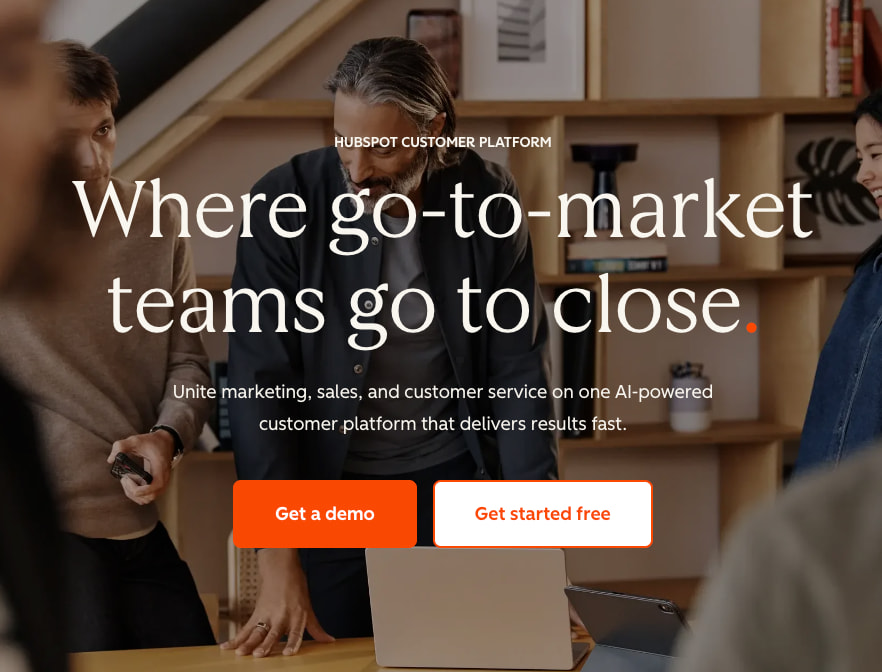
By combining CRM, automation, and AI into a single platform, HubSpot Sales Hub helps simplify adoption for growing teams. It stands out for its ease of use and relatively low implementation overhead, particularly for SMB and mid-market organizations.
The platform includes built-in tools for calling, meetings, and document management, allowing teams to automatically capture interaction details, track engagement signals, and manage pipelines without jumping between systems. It also provides sales forecasting and reporting features that give decision-makers visibility into deal progression and revenue performance.
HubSpot’s all-in-one approach makes it one of the more accessible options for teams looking to consolidate their tech stack. That said, more advanced functionality, particularly around customization and scale, requires higher-tier plans. In complex enterprise environments, the platform may offer less flexibility than more specialized or deeply integrated solutions.
4. Gong
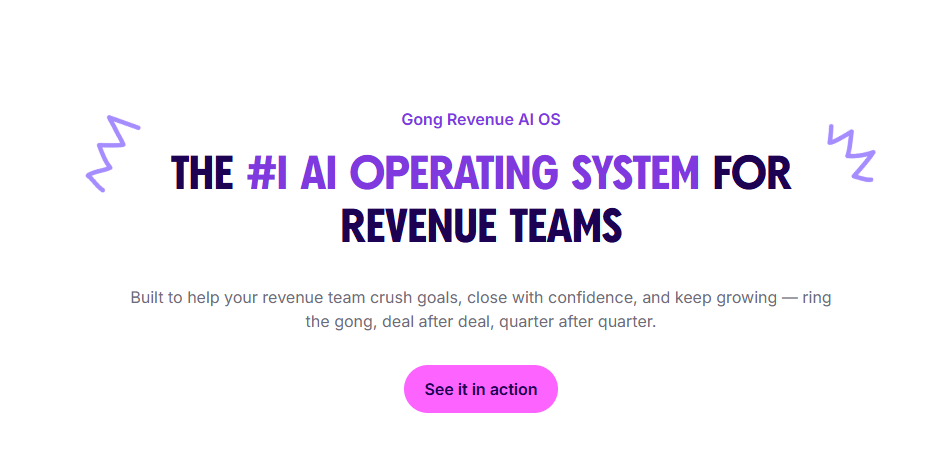
Gong is a revenue intelligence platform that focuses on analyzing sales conversations to improve forecasting and deal execution. As a category leader in conversation intelligence, it’s a standard choice for enterprise teams managing complex pipelines.
The platform captures and analyzes customer interactions across calls, meetings, and emails, using AI to identify deal risks and highlight behaviors associated with successful outcomes. These findings feed into forecasting models that help revenue leaders make more informed decisions without relying on delayed CRM updates. Gong also supports coaching by surfacing examples of effective conversations and common objections.
Gong provides strong post-conversation analysis, meaning its primary focus is on evaluation rather than in-the-moment assistance. Sales professionals looking for real-time guidance during live interactions may need to pair it with additional tools.
5. Outreach
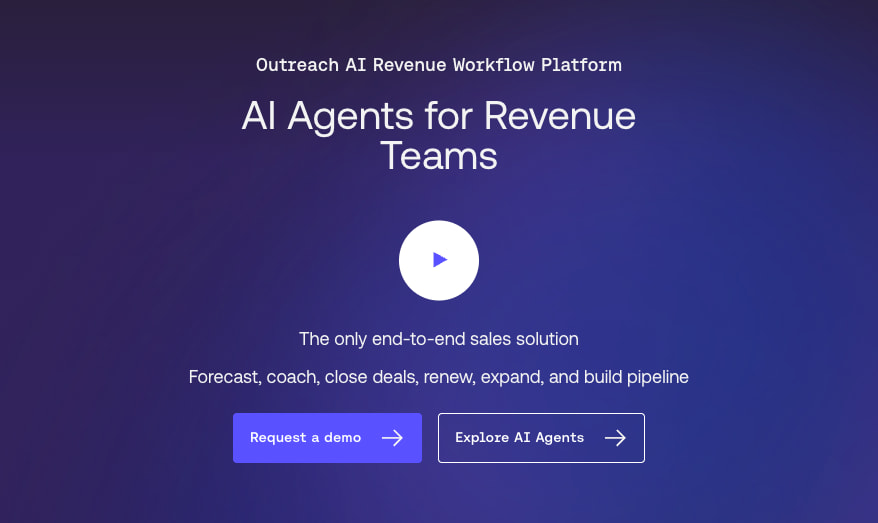
Outreach is an AI-driven revenue workflow platform designed to manage sales execution from prospecting through close. It’s widely used by teams prioritizing outbound sales that need structured processes to scale engagement across channels.
The platform uses AI to automate research, personalize outreach, and maintain CRM data hygiene. Its multichannel sequencing capabilities allow teams to coordinate email, phone, and SMS while tracking engagement signals. Outreach also provides deal health scoring and forecasting tools that help teams identify risks and promising follow-ups.
For organizations with established outbound strategies, Outreach can streamline workflows and improve consistency. However, its depth and flexibility can introduce a steeper learning curve for teams without mature processes in place. Realizing full value depends on aligning it with clear workflows and high adoption.
What to look for in AI sales tools
Not all AI-powered sales tools deliver meaningful results. The difference between average and high-performing platforms comes down to how well they support real sales workflows.
For enterprise and mid-market teams, evaluating platforms requires looking beyond basic automation to how they reduce friction, improve visibility, and drive consistent execution at scale.
Real-time conversation intelligence
Many tools focus on analyzing conversations after they happen. While that provides useful data, it limits impact.
More advanced AI sales software supports reps during live interactions, where guidance can directly influence outcomes. This includes surfacing relevant context, prompting next steps, and helping reps navigate objections as they arise. This shift from reactive analysis to proactive support can have a measurable impact on win rates and team consistency.
Automated CRM and workflow integration
Manual data entry remains a primary failure point in sales operations. When reps are responsible for logging calls, updating records, and tracking follow-ups, data quickly becomes inconsistent and incomplete.
The most effective AI solutions eliminate this burden. They automatically capture interaction data, generate summaries, and sync updates directly into CRM systems. This ensures pipeline visibility reflects what’s actually happening in customer conversations, not what was entered after the fact.
Predictive insights that drive action
Forecasting alone isn’t enough. Platforms must translate findings into clear, prioritized actions.
High-performing platforms identify deal risks early, highlighting changes in buyer engagement and recommending next steps. This allows teams to prioritize high-probability opportunities and intervene before deals stall. For operations leaders, this turns forecasting from a reporting function into a decision-making tool.
Voice-first AI and conversation context
Although most AI sales software is built around text-based inputs like email and chat logs, a significant portion of enterprise sales activity happens in conversations.
Voice-first AI captures nuances that text alone can’t, including tone, pace, and sentiment shifts. These signals provide a deeper understanding of buyer intent and deal health, creating a more complete view of pipeline performance and a more accurate assessment of customer relationships.
How to implement AI sales tools successfully
Adopting AI sales tools requires an operational shift. The most successful implementations focus on clear outcomes, strong alignment across teams, and systems that integrate seamlessly into existing workflows.
Define clear goals and success metrics
Start with a clear understanding of what you want AI sales tools to improve.
Are you trying to reduce operational overhead, increase win rates, or improve pipeline visibility? Your answer should guide every decision, including the platforms you evaluate and how you measure success after rollout.
Tie these initiatives directly to business outcomes, such as:
- Shortening the sales cycle
- Increasing conversion rates
- Improving forecast accuracy
Set realistic benchmarks and establish a baseline before launch. Most teams won’t see immediate transformation, but initial improvements help build momentum and justify further investment.
Assess vendor reliability and long-term support
Choosing the right platform also means choosing the right partner.
Evaluate vendors based on:
- System uptime and reliability (especially for real-time tools)
- Onboarding quality and training support
- Product roadmap and pace of innovation
Reliability is especially important for enterprise teams. Tools that support live conversations or real-time workflows must perform consistently without disruption.
Evaluate integration, security, and data readiness
The effectiveness of these tools depends on how well they connect to your existing systems. Before selecting a platform, assess how it integrates with your CRM, communication tools, and data infrastructure. Look for real-time, bi-directional data flow so information uncovered during conversations is immediately reflected across your systems.
At the same time, validate security and compliance requirements. Enterprise-ready AI sales software should support:
- SOC 2 or equivalent certifications
- Data governance and access controls
- Industry-specific compliance, such as the Health Insurance Portability and Accountability Act (HIPAA) and the Financial Industry Regulatory Authority (FINRA)
Data quality is equally important. AI models rely on clean, structured data to deliver accurate insights. If your data is fragmented or inconsistent, address those gaps early to avoid limiting the value of implementation.
Build cross-functional buy-in early
AI adoption works best when it’s supported across the organization. When AI initiatives are backed by the C-suite, teams are more likely to adopt new workflows and trust the outputs. Input from frontline users, including sales reps, managers, and operations teams, helps ensure the tools address real challenges.
Start with a focused use case that can deliver results quickly, such as automating call summaries or improving lead prioritization. Early wins help demonstrate value and build confidence before expanding to more advanced capabilities.
It’s also important to address customer expectations. Be transparent about how AI is used in sales interactions, how customer data is collected, and how it benefits the digital customer experience. Clear communication increases trust and reduces resistance.
Track performance and iterate continuously
Implementation doesn’t end at deployment. To get full value, you need to measure impact and refine your approach over time.
Focus on metrics that reflect both efficiency and outcomes, such as:
- Sales cycle length
- Conversion and win rates
- Pipeline velocity and forecast accuracy
- Customer retention or churn
Compare performance against your pre-AI baseline to identify where improvements are happening and where they aren’t. If results fall short, adjust workflows, retrain teams, or refine how the AI is being used. In many cases, performance gains come from combining AI capabilities with better processes, not from the technology alone.
How AI sales tools transform your operations
Our RingCentral Trends 2025 report found that a majority of decision-makers expect AI to reshape how their teams prioritize work, execute conversations, and manage pipeline performance at scale. A majority (76%) look to AI for improved service quality, and 68% expect it to also improve customer lifetime value.
These are just some of the many benefits AI brings to business operations.
1. Reduce manual work and reclaim selling time
According to Forrester research on productivity, the average sales rep spends about 27% of their workweek on administrative tasks.1 AI tools free up time by automating workflows that don’t require human judgment.
AI sales software can:
- Capture and summarize calls automatically
- Update CRM records in real time
- Generate follow-ups and schedule next steps
What this means for you: Reps spend more time in conversations and less time switching between tools. For operations leaders, this also improves data accuracy so that your pipeline reflects real activity rather than delayed or incomplete updates.
2. Improve pipeline focus with better data and prioritization
AI sales tools help teams focus on the opportunities that matter most. By analyzing customer behavior, engagement signals, and historical data, they surface which leads and deals are most likely to convert.
Instead of relying on intuition, teams can:
- Prioritize high-value opportunities
- Identify stalled or at-risk deals earlier
- Receive recommendations for next-best actions
What this means for you: Sales teams operate with clearer direction while leaders gain more reliable forecasting. This is especially valuable in complex or enterprise sales environments where pipeline visibility is critical.
3. Strengthen customer conversations with real-time insights
The most meaningful impact of AI sales tools happens during customer interactions. Conversations, including calls, meetings, and messages, are where deals are won or lost. According to McKinsey, a European telco recently improved customer satisfaction by 20–30% after deploying Gen AI to analyze call scripts, identify skill development opportunities, and create dedicated coaching programs.2
Advanced AI sales tools provide:
- Real-time context during live conversations
- Insights into customer sentiment and intent
- Post-call summaries and coaching signals
They also enable personalization at scale by pulling in relevant context from past interactions, CRM data, and engagement history.
What this means for you: Your team can respond faster, handle objections more effectively, and deliver more consistent experiences across every interaction. Over time, this leads to stronger relationships and more predictable revenue outcomes.
Improve every sales conversation with AI
Each of these platforms solves a different problem, whether CRM automation, outbound execution, or sales forecasting. But for many teams, performance ultimately hinges on conversations. Calls, meetings, and real-time interactions move deals forward or let them stall, and visibility here is often limited.
RingCentral takes a unified approach with RingCX, combining communication, AI, and analytics in a single platform. Teams can manage interactions across channels, get real-time support during conversations, and capture insights automatically without relying on disconnected tools.
The result is a clearer view of your pipeline, fewer manual workflows, and more consistent execution. If you’re evaluating AI sales tools and want to reduce complexity while improving performance, it’s worth exploring how RingCX fits into your sales strategy.
Sources
1. Yee, L., Deveau, R., & Reis, S. (2024, September 16). An unconstrained future: How generative AI could reshape B2B sales. McKinsey & Company.
2. Forrester Research. (n.d.). Let’s fix the key obstacle to improving your sales productivity.
Updated Apr 07, 2026